From Hungary to IBO Silver: Botond's Story
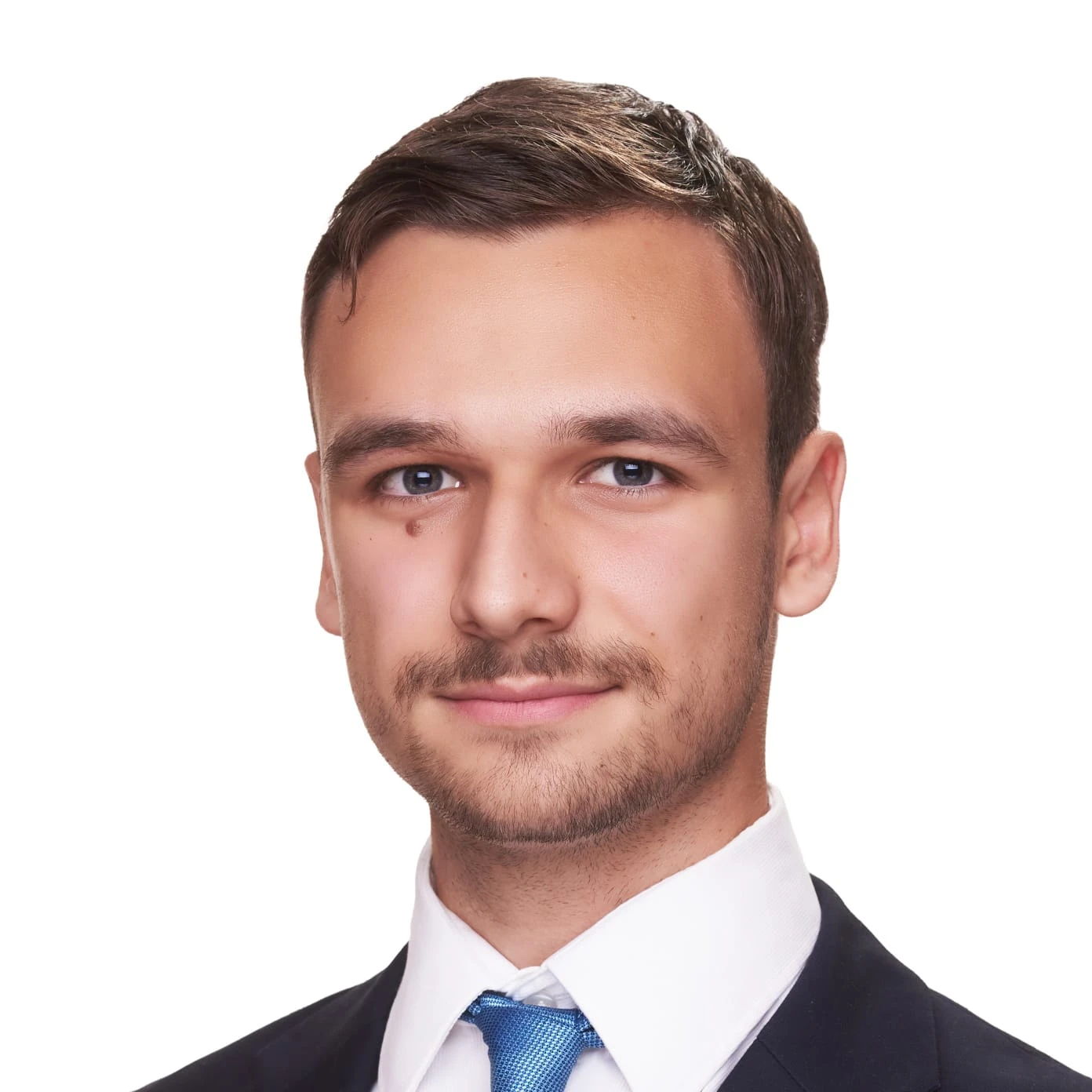
In his own words
Hi future IBO participants! I'm Botond Juhász from Hungary. I participated at the IBO 2026 in Lithuania. This competition was a memorable thing in my life, and I can only suggest you to take part in it. I got to know a lot of great people from other countries who have the same interests as me. I also won a silver medal at the competition, which I'm really proud of.
I'm currently studying medicine and want to do research about immunology, because I want to find a cure for autoimmune diseases. IBO can give you a huge motivation boost to achieve your goals! So dream big, enjoy what you do, learn with enthusiasm, and work hard, it will pay off. Best of luck with the preparation and also with the competition!
Hungary’s IBOHUN selection process
Botond made it onto Hungary’s team of four through the country’s official preparation programme, though in his account it left something to be desired:
"I was preparing for the competition with the official preparation program in Hungary, which was held for the 4 students who had been selected for the competition. I think that the preparation is quite good and useful in Hungary especially when we are talking about the practicals. The main problem with it is that it's too short. We only had 8 days of preparation, which was very intense but it wasn't enough to cover all the topics needed for IBO."
He also walked us through how that team of four gets picked in the first place:
"In Hungary we have 4 rounds in the selection process. The 1st and 2nd rounds are online tests. Both of them are 90 minutes long and the questions are very similar to the theory papers at the IBO. These are taken by every contestant, and the best 16-30 people get selected for the next round."
"The 3rd round is a written test, which consists of harder, more time-consuming questions. Here, students have 3 hours to complete a huge test with various complex questions. From here 8-16 contestants are selected for the final round."
"The 4th round is basically an IBO in miniature. This round goes on for 2 days: on the first day we write 2 theoretical exams, which are both 3 hours long. These are basically simulating the real theory exams at the IBO: same types of questions, same time limit. On the second day we write our practical exams, which are from the same topic as the official topics of that year's IBO. This way only those get selected, who are best at what we are going to do in the real competition. From the t-score of these two days' tests, the official team of 4 is selected to participate at the IBO."
The official picture
Botond’s account lines up closely with how Hungary’s selection process is described officially. The competition, the IBOHUN Válogató Verseny (established in 2009), is run by MABITE (the Association of Hungarian Biology Teachers) in cooperation with the University of Szeged:
| Round | Format | Selects |
|---|---|---|
| 0th round: OKTV Biológia | Paper-based national biology competition, proctored at schools (~5,000 students) | Entry point into the selection pipeline |
| Rounds 1-2 | Online tests, 90-120 minutes each, multiple choice and calculation questions | ~100-120 eligible participants |
| Round 3 | One-afternoon, 180-minute paper-based test in Budapest | Top 25-30 contestants |
| Round 4 | Two days in Szeged: theory papers built from past IBO exams, plus 3-4 practical lab tasks | Top 4 (plus alternates) represent Hungary |
Scores across the later rounds are normalised (z-scores converted to a t-score), so the field narrows on a consistent basis at each cut, ending in the same t-score-based final ranking Botond described deciding the team of four.
Sources: IBO country profile, Hungary (IBOHUN Válogató Verseny).
Why BiOGuide, in his own words
"That's why I think that this site could help us, Hungarians, and contestants from other countries, to prepare much better for the competition. It has a lot to offer: you can test your knowledge so that you know which topics are harder for you and what you need to improve. You can find everything in one place for a specific topic: references, diagrams and explanations, which I find really useful. You don't have to jump back and forth to understand something. In this site everything is in one place. This way you can study faster, which means you can get way more knowledge with the same amount of effort."
"Also, if you want to start preparing on your own for your national selection, this site can help you with that. The topics are well organised, so you are able to find what you are looking for much easier. Lessons in the same topic are built to each other so you shouldn't have any trouble understanding them."
"If you are a beginner in biology and want to start preparing entirely from scratch, you can find the right path to go through the lessons, thanks to the difficulty indicators on each lesson."
"I hope that this site will be useful for every future participant. Just study with enthusiasm, enjoy what you do, and work hard, because it will pay off. Good luck with the preparations and also with the competition!"
How BiOGuide fits in
Botond’s account maps onto specific things BiOGuide is built to do:
- Testing his knowledge to see which topics needed work is the Study Dashboard: after a timed attempt it builds a subject-by-subject mastery breakdown, so effort goes toward genuinely weak areas instead of a guess.
- “Everything in one place… references, diagrams and explanations” is Notes @ BiOGuide: each topic page gathers what a student would otherwise hunt across a full textbook chapter for.
- The difficulty indicators he called out are real: every Notes @ BiOGuide page carries a beginner/intermediate/advanced badge, alongside prerequisite and “next topic” links, exactly the “lessons in the same topic are built to each other” chain he describes, and the on-ramp for a student starting entirely from scratch, like he suggests.
- Practicing against real past questions is BiOrchive and the Question Bank beneath it, with every question tagged by the syllabus topic it draws on so practice stays targeted rather than random.
This article preserves Botond’s own words, shared and published with his consent. If you competed in a Biology Olympiad and want to share your story, reach out to us; we would love to hear from you.