Q2 - Anion Effects on Hemoglobin Oxygen Affinity
O2-binding or -affinity to hemoglobin is affected by specific anions, in particular 2,3 bisphosphoglycerate (BPG) and chloride (Cl−), which are present in red blood cells and bind to the hemoglobin molecule at specific sites (Fig.). Hemoglobin saturation curves for hemoglobin without anions (ctrl) and with BPG, chloride or both, as a function of the partial pressure of oxygen in the blood.
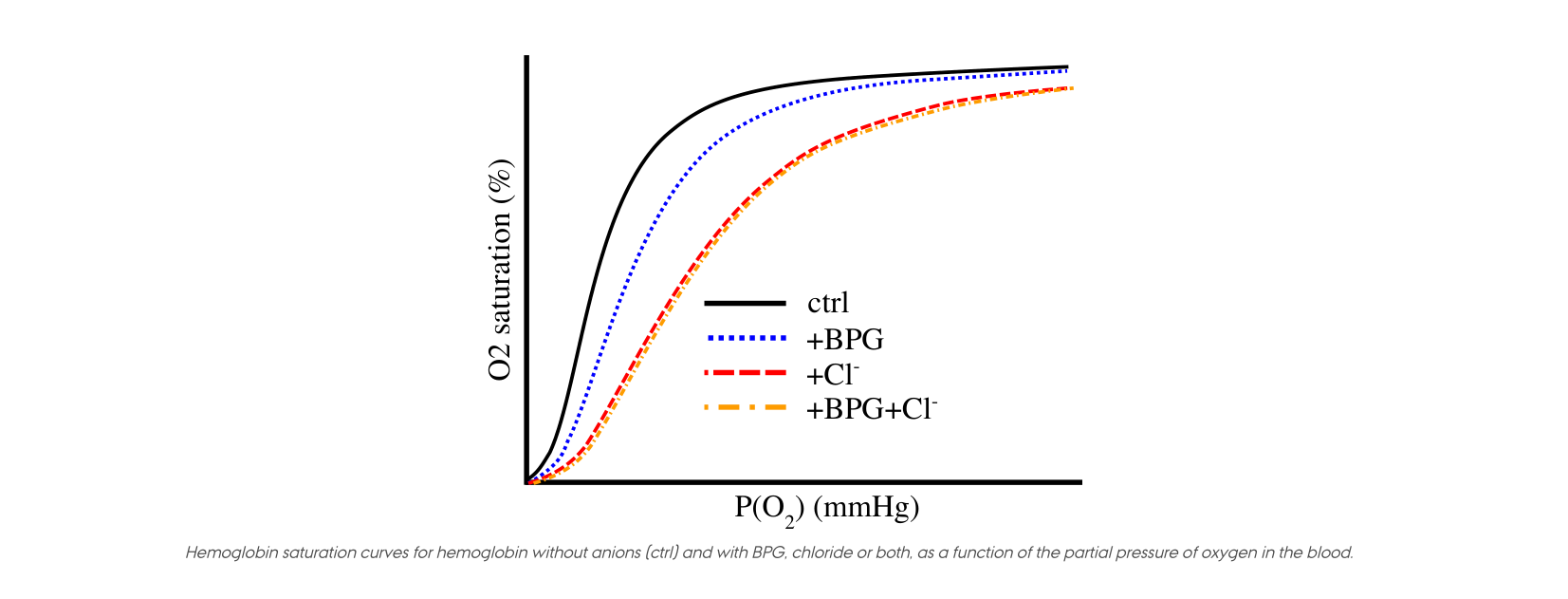 Figure 1.
Using the information and data, determine which of the statements are true or which are false.
A. If peripheral tissue lacks oxygen, red blood cells produce more BPG
B. At high altitudes, mutations leading to changes from polar to non-polar amino acid residues in the BPG binding site of the hemoglobin molecule will be favourable for the affinity of O2 to hemoglobin in the lungs
C. It is likely that chloride and BPG bind at different sites in the hemoglobin molecule
D. BPG decreases the total oxygen saturation capacity of the hemoglobin
Question reproduced from IBO 2015, Theoretical Exam A, licensed under CC BY-NC-SA 4.0 - attributed to the International Biology Olympiad. Open the full exam PDF · Community solutions (unofficial)