Q34 - Environmental DNA and Acoustic Detection of Harbour Porpoises
Use of environmental DNA (eDNA) is a new tool in tracking of marine organisms. In a study, a base sequence from the mitochondria of the cetacean Harbour Porpoise was analysed. Samples were taken both from a harbour pen and outside from natural sites (fig.). Base sequences (base no. 82 to 119) from human, seal, porpoise, and 3 samples of eDNA (Fjord Bælt, Site 1 and Site 7). In addition, echolocation clicks were used for acoustic monitoring (table). Detection of harbour porpoise DNA and sounds at 11 sites, including a control DNA from skin.
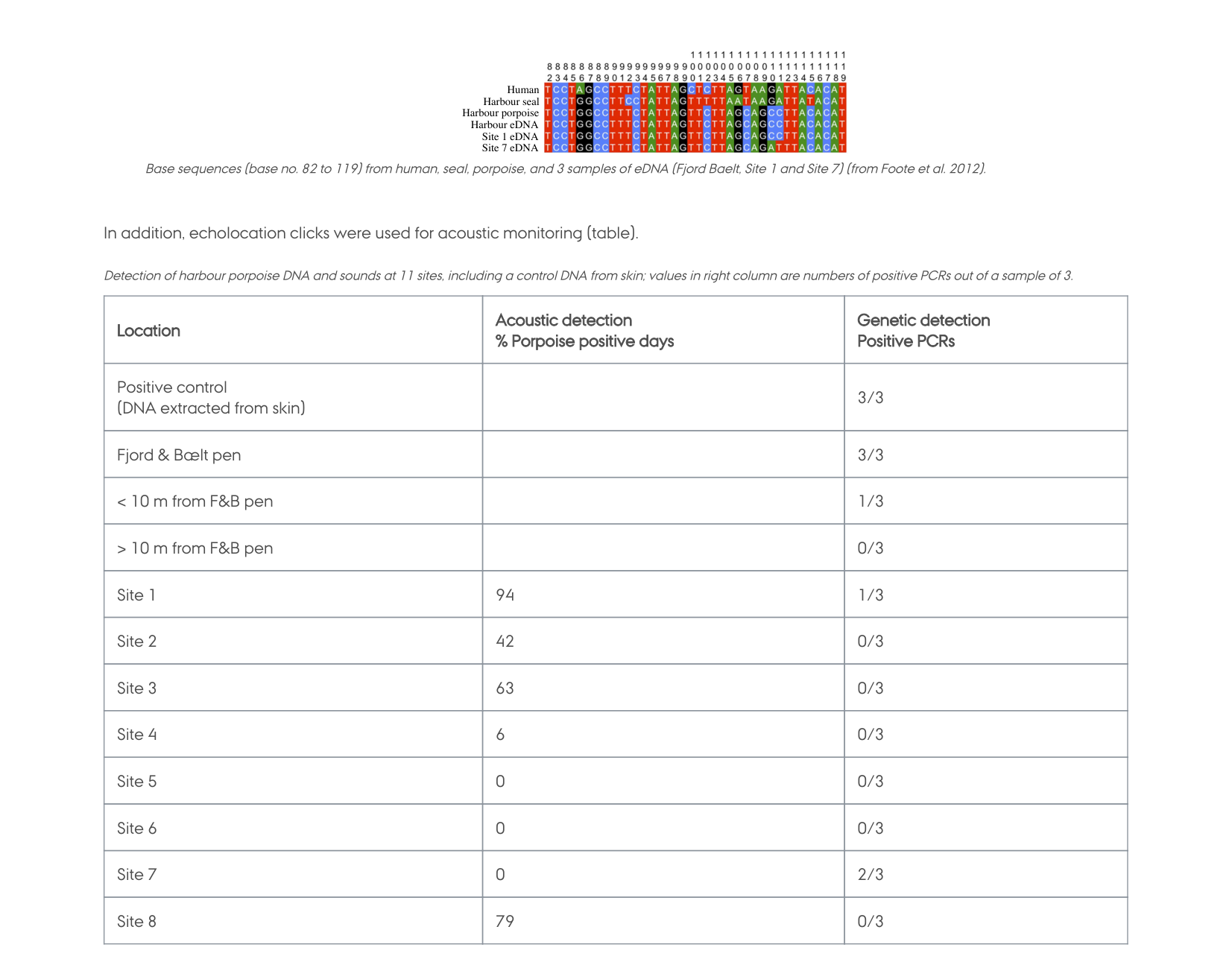 Figure 1.
Using the information and data, determine which of the statements are true or which are false.
Question reproduced from IBO 2015, Theoretical Exam A, licensed under CC BY-NC-SA 4.0 - attributed to the International Biology Olympiad. Open the full exam PDF · Community solutions (unofficial)