Q43 - Non-Lethal Predation Effects on Dragonfly Larval Survival and Metamorphosis
A population of dragonfly larvae (Leucorrhinia intacta) is separated into two groups. In both groups, larvae populations are put inside a cage with no food limitation. The first group is exposed to a fish predator that can swim freely, but cannot enter the cage. The second group is a control with no fish. The proportion of larvae surviving to metamorphosis and the proportion of live larvae failing to complete emergence in the two groups are shown in Figure Q.43.
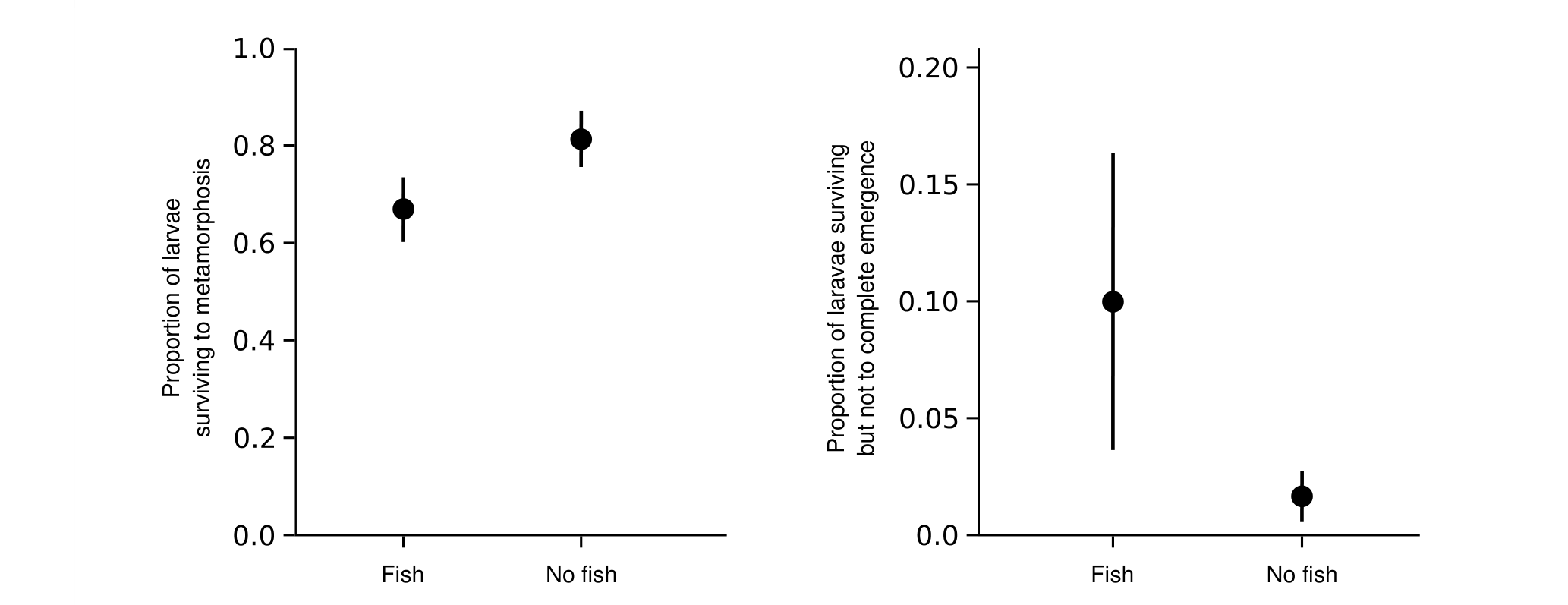 Figure 1.
Using the information and data, determine which of the statements are true or which are false.
Question reproduced from IBO 2016, Theoretical Paper A, licensed under CC BY-NC-SA 4.0 - attributed to the International Biology Olympiad. Open the full exam PDF · Community solutions (unofficial)