Q46 - Grazing Intensity, Root Competition, and Sex Ratio in Poa Grass
The dioecious perennial Poa grass coexists with Stipa grass in the steppes. The former is highly preferred by domestic and wild herbivores, while the latter is relatively unpalatable. Scientists grew Poa plants at different distances from Stipa plants, with or without a root barrier, at different grazing levels, and then recorded the growth of Poa plants. In another experiment, they recorded the density of Poa male and female plants under different grazing levels.
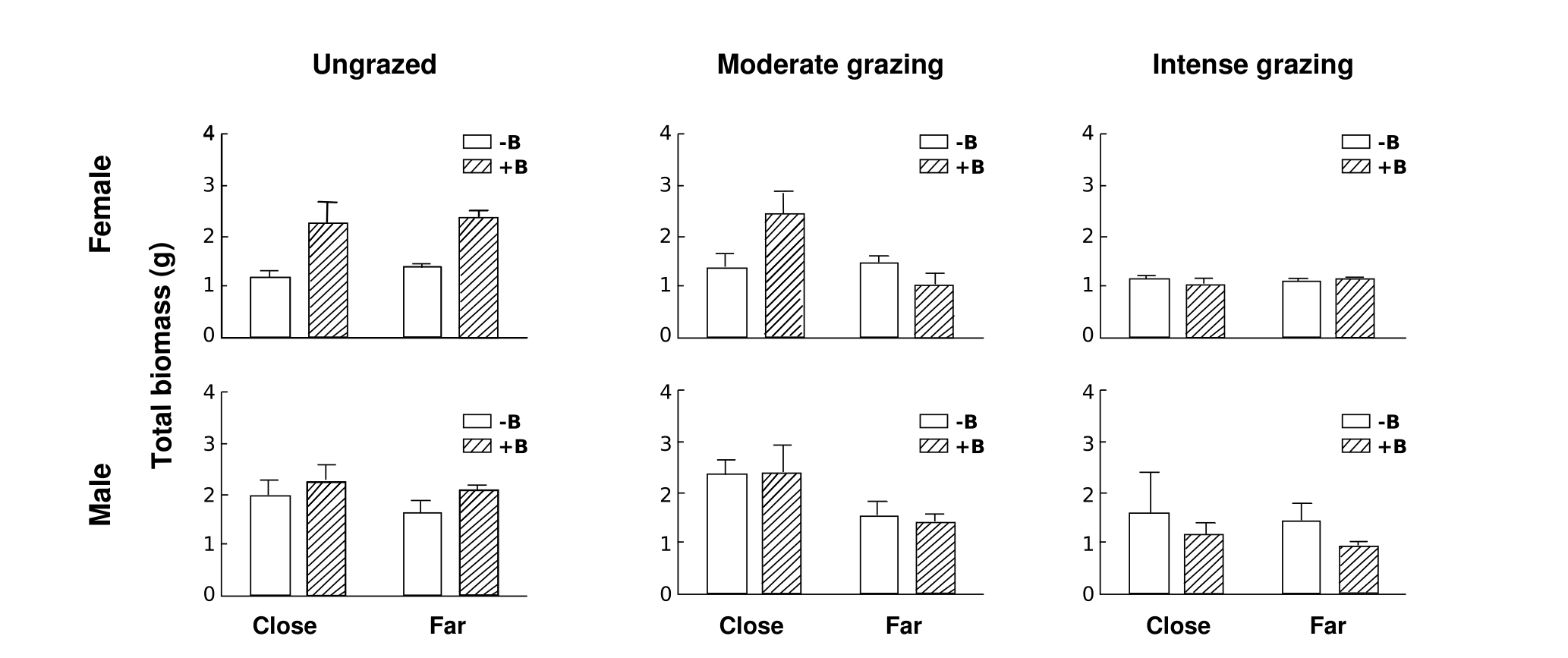 Figure 1.
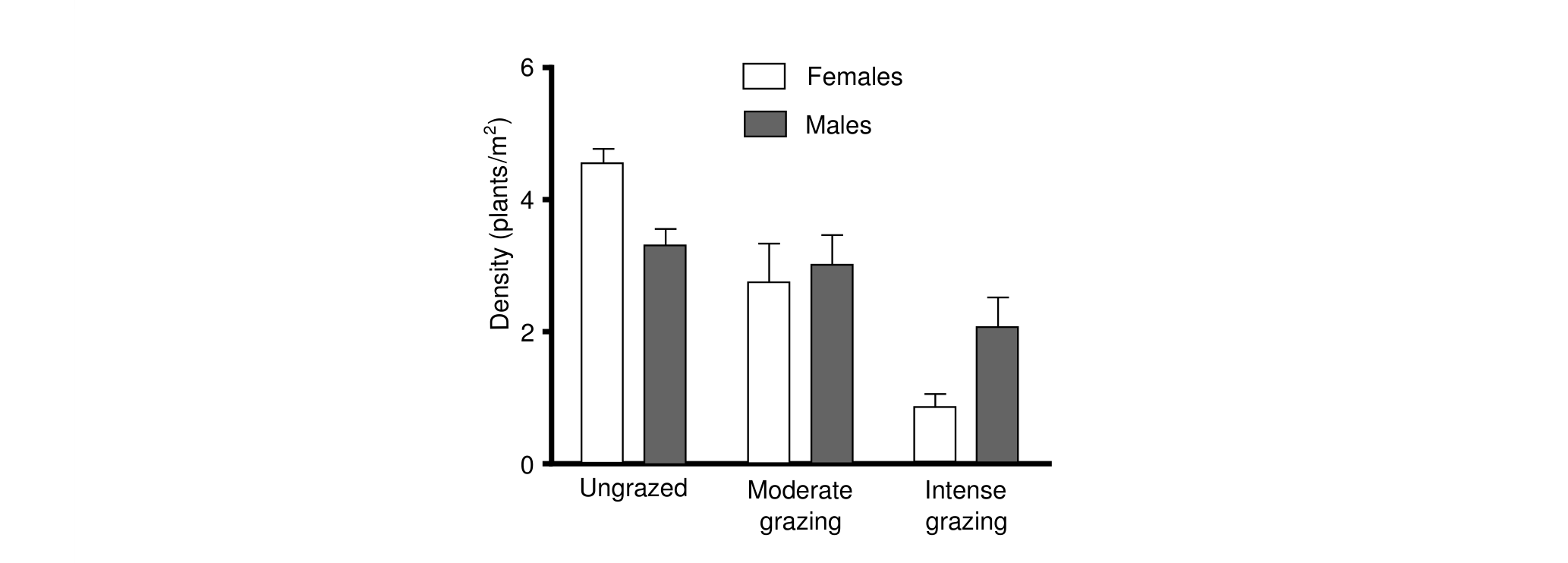 Figure 2.
Using the information and data, determine which of the statements are true or which are false.
Question reproduced from IBO 2016, Theoretical Paper A, licensed under CC BY-NC-SA 4.0 - attributed to the International Biology Olympiad. Open the full exam PDF · Community solutions (unofficial)