Q78 - Cortisol and 2-AG Dynamics During Motion-Sickness-Inducing Flight
Some researchers studied the changes in the level of saliva cortisol and 2-AG (2- arachidonoylglycerol) concentration in blood in two groups of people with motion sickness and without motion sickness (no sickness) during parabolic flight maneuvers (PFs). During PFs, the saliva cortisol levels and 2-AG blood concentrations were measured from samples taken in-flight before start of the parabolic maneuvers (T0), after 10 parabolas (T1), 20 parabolas (T2), and 30 parabolas (T3), termination of PFs (T4) and 24 h later (T5). The results are shown in Figure Q.78.
Figure Q.78
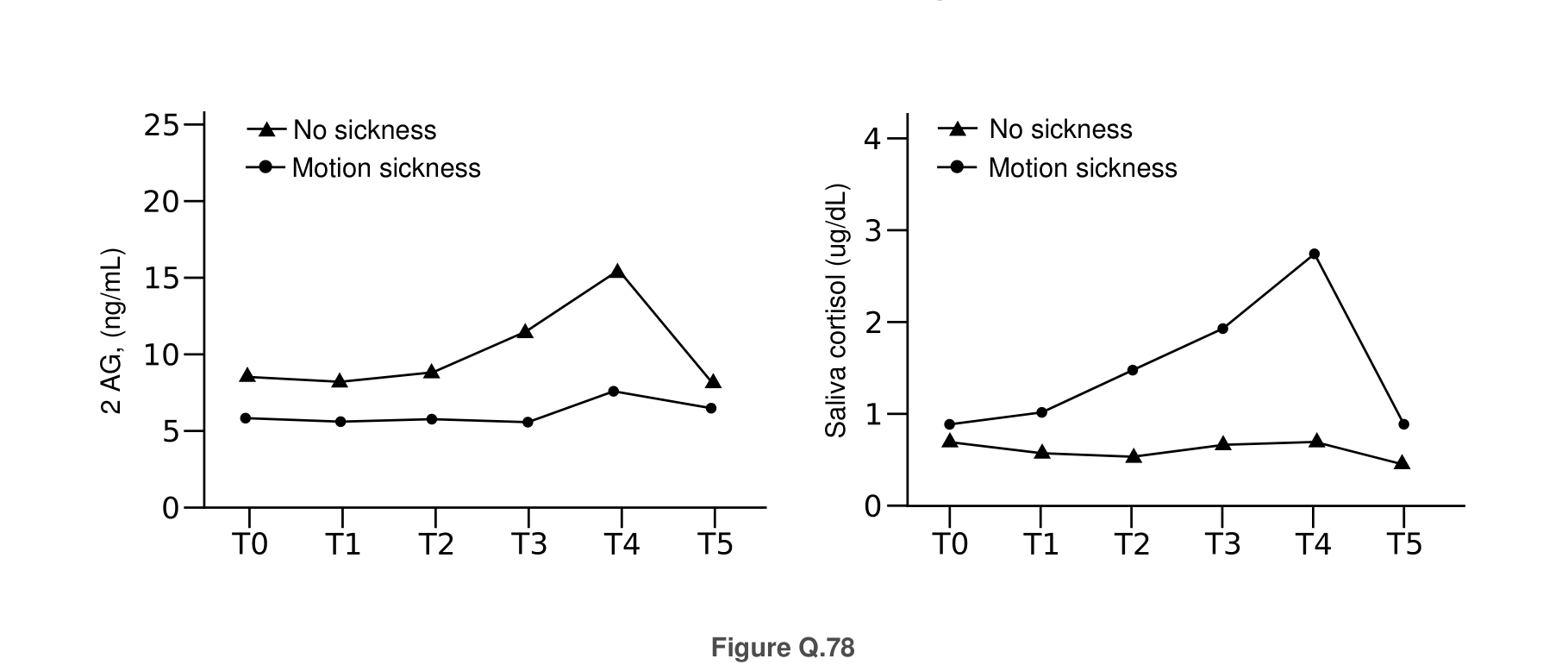 Figure 1.
Using the information and data, determine which of the statements are true or which are false.
Question reproduced from IBO 2016, Theoretical Paper B, licensed under CC BY-NC-SA 4.0 - attributed to the International Biology Olympiad. Open the full exam PDF · Community solutions (unofficial)