Q88 - Chromosome Size, Gene Density, and Embryonic Lethality in Mouse Trisomies
Mouse embryos that were trisomic for each of the 20 different chromosomes were monitored during embryonic development. Their survival time was plotted against the size of trisomic chromosome in Fig.Q.88.
Fig.Q.88 Day of embryonic lethality plotted against the size of the trisomic mouse chromosome, for trisomies of chromosomes 1 through 19 (all but chromosome 20, which is viable).
Based on this information, indicate in the answer sheet if each of the following statements is true or false.
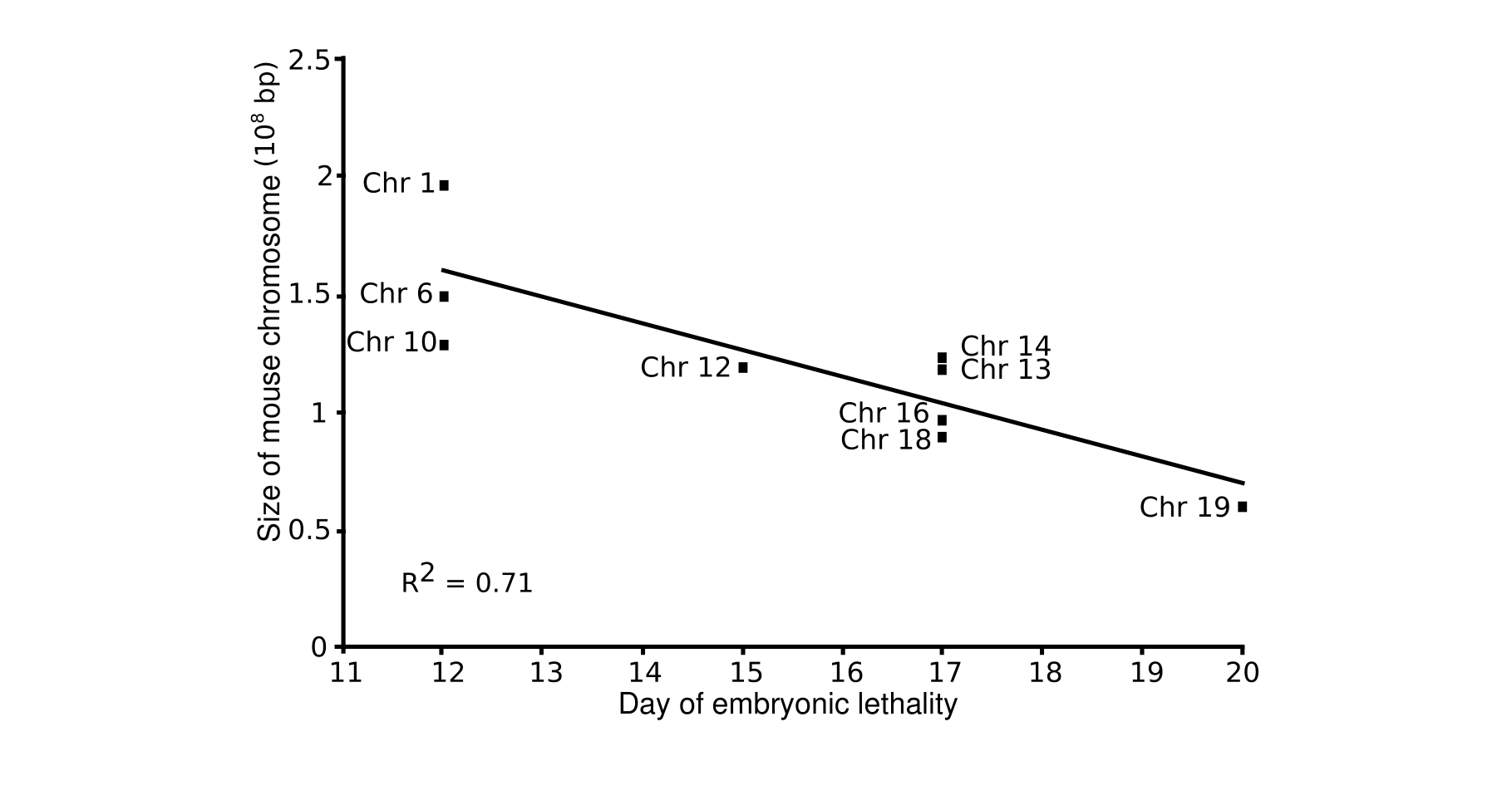 Figure 1.
Using the information and data, determine which of the statements are true or which are false.
Question reproduced from IBO 2016, Theoretical Paper B, licensed under CC BY-NC-SA 4.0 - attributed to the International Biology Olympiad. Open the full exam PDF · Community solutions (unofficial)