Q14 - Seasonal Gene Expression in Cork Formation
Cork oak (Quercus suber) produces suberin, a highly resistant material, from fatty acids, and uses it to reinforce the cell walls of cork. The expression of genes specific to cork tissue was measured across the year, and the genes were grouped into biosynthetic enzymes, or chaperone proteins. Sir Hugh Pellham (1954-present) discovered chaperones, which assist other proteins to fold properly.
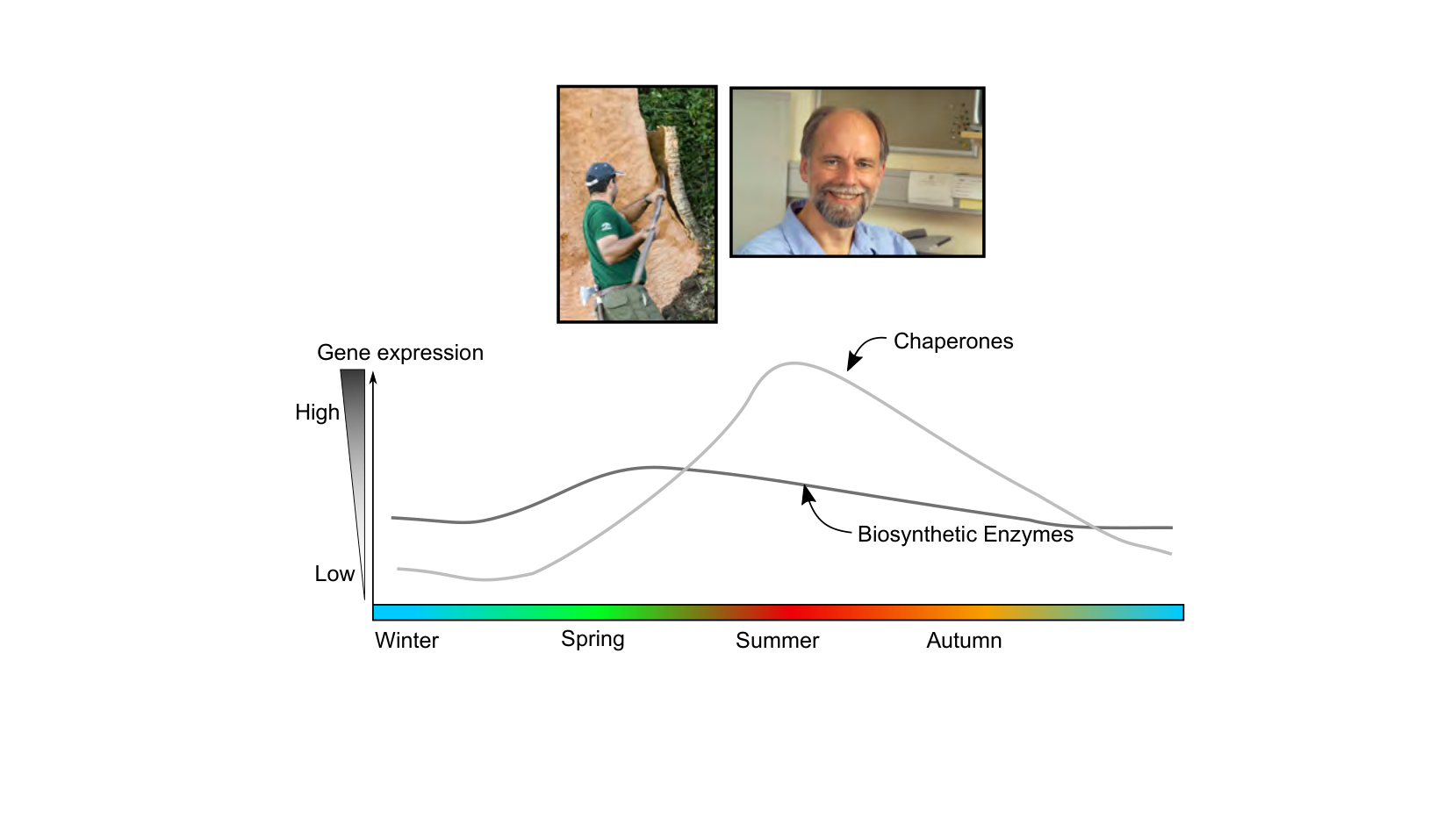
Using the information and data, determine which of the statements are true or which are false.
A. Cork tissue grows fastest in late spring.
B. The enzymes produce hydrophilic molecules.
C. Increased expression of chaperones may allow cork to continue growing, despite higher temperatures.
Question reproduced from IBO 2017, Theoretical Exam A, licensed under CC BY-NC-SA 4.0 - attributed to the International Biology Olympiad. Open the full exam PDF · Official answer key & worked solutions