Q42 - Correlated rDNA Abundances Reveal Bacterial Niche Structure
Sequencing of ribosomal RNA genes (rDNA), which have very low diversity within families, reveals the identity and relative abundance of bacterial families in different soils. Bacteriovoracaceae and Bdellovibrionaceae are predatory bacteria. Each has a different maximum growth rate in optimal conditions. Haliangiaceae and Koribacteraceae are non-predatory.
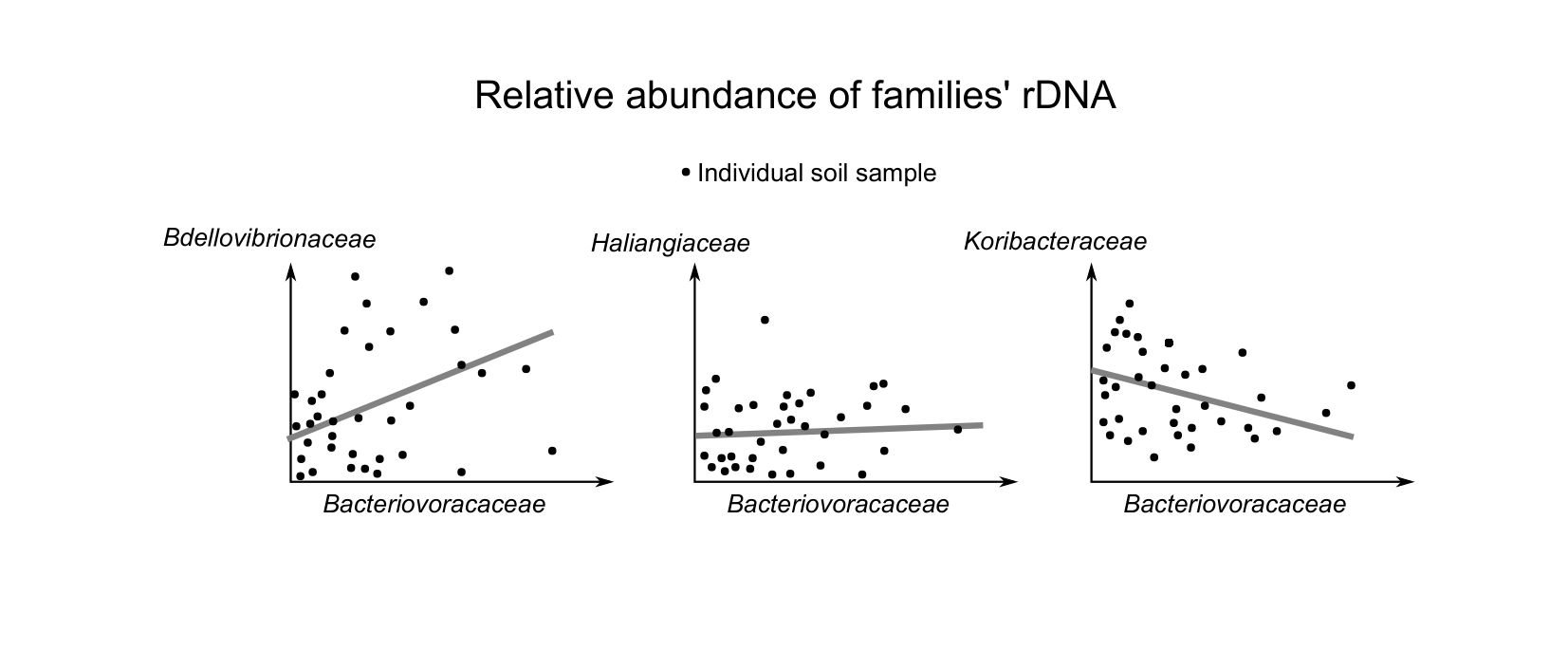
Using the information and data, determine which of the statements are true or which are false.
A. Bdellovibrionaceae and Bacteriovoracaceae occupy different niches.
B. Bacteriovoracaceae is an important predator of Haliangiaceae.
C. Bacteriovoracaceae and Koribacteraceae might occupy different habitats.
D. rDNA sequencing could be used to assess the abundance of individual Bacteriovoracaceae species.
Question reproduced from IBO 2017, Theoretical Exam A, licensed under CC BY-NC-SA 4.0 - attributed to the International Biology Olympiad. Open the full exam PDF · Official answer key & worked solutions