Q2 - Ocean Acidification and Deep-Sea Chemosynthesis
Oceans also sink more than 30% of anthropogenic carbon dioxide, which dissolves to form an acid that alters calcium carbonate solubility (1). Many marine invertebrates have calcium carbonate skeletons, which form marine sediments and reefs. The British island of Bermuda is a hub for studying coral reefs and sea trenches, so the effect of CO on Bermudan sediments in seawater was measured (2). Five thousand metres below the reefs, 2 marine bacteria fix CO to grow (3). 2
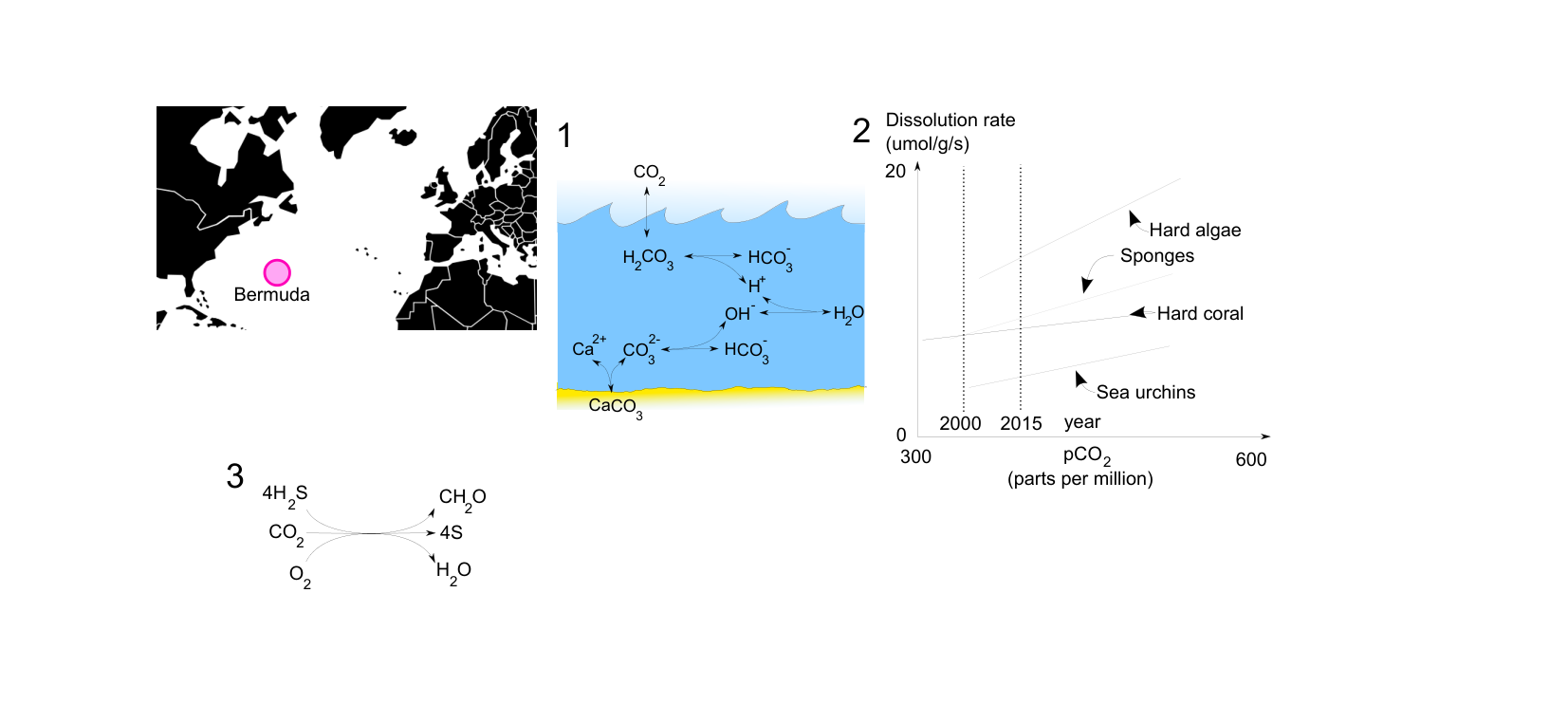
Using the information and data, determine which of the statements are true or which are false.
Question reproduced from IBO 2017, Theoretical Exam B, licensed under CC BY-NC-SA 4.0 - attributed to the International Biology Olympiad. Open the full exam PDF · Official answer key & worked solutions