Q39 - Phosphocreatine and Glycolysis Power the 100m Sprint
In the last few games, team GB has used sport science to finish second in Olympic and Paralympic medal tables. The running velocity of different gold-medal 100m sprinters is presented (1). Phosphocreatine, which is present in the cytoplasm of muscle, buffers ATP levels in a one-step reaction (2). Glycolysis generates a few ATP by converting glucose to pyruvate. Mitochondria generate dozens of ATP by converting pyruvate to CO . 2
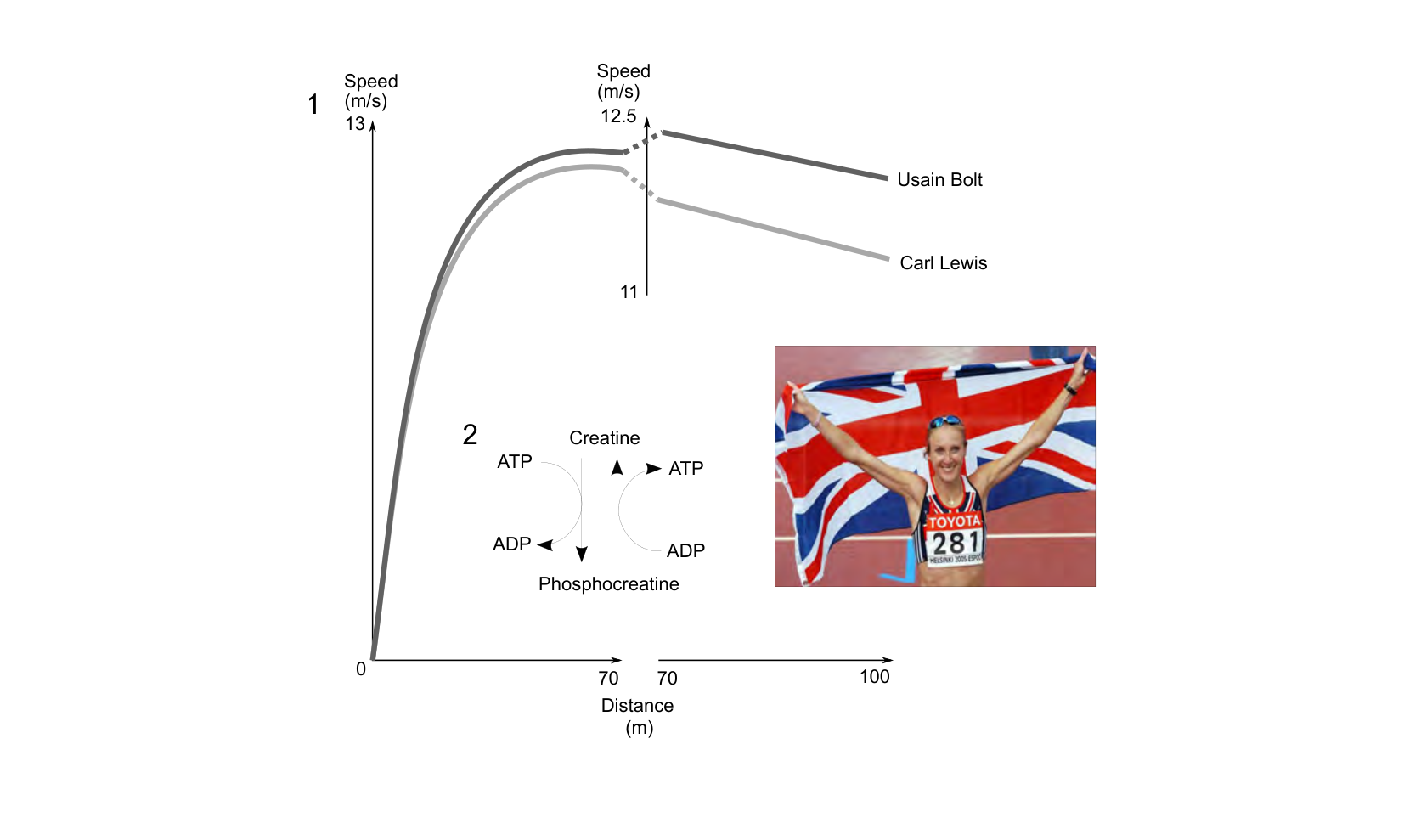
Using the information and data, determine which of the statements are true or which are false.
A. Faster sprinters metabolise more muscle glycogen to CO than slower sprinters. 2
B. The kinetics of their glycolytic enzymes are an essential determinant of which medals these sprinters win.
C. Creatine, as a dietary supplement, would enhance the performance of Usain Bolt (Jamaica's 100 and 200 m winner) more than Paula Radcliffe (Britain's record breaking marathon runner).
D. Glycolysis becomes the main energy source of these sprinters after ~ 70 meters.
Question reproduced from IBO 2017, Theoretical Exam B, licensed under CC BY-NC-SA 4.0 - attributed to the International Biology Olympiad. Open the full exam PDF · Official answer key & worked solutions