Q42 - Extracellular vs Intracellular Resistance Enzymes Shape Selection Pressure
Sir Alexander Fleming (1881-1955) discovered antibiotics, but humanity’s biggest killers are now mostly resistant to them. In one pathogen, antibiotics are degraded either by intracellular enzymes, or by enzymes released into the surrounding environment. A strain susceptible to antibiotics was labelled red, and a resistant strain was labelled yellow. Equal amounts of susceptible and resistant bacteria were mixed and seeded as a dense lawn on plates. These were treated with drug A or B at different concentrations, and grown for a period of time. The colour of the remaining cells was photographed.
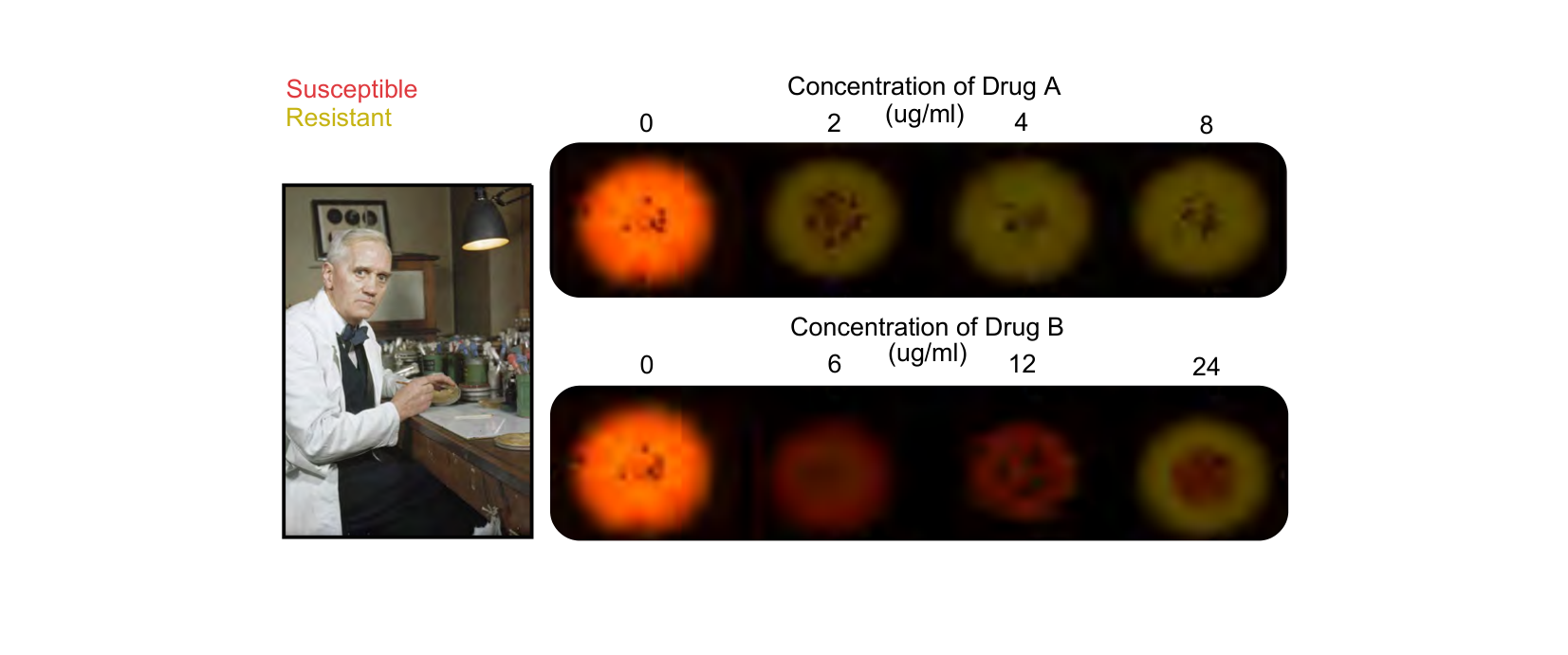
Using the information and data, determine which of the statements are true or which are false.
Question reproduced from IBO 2017, Theoretical Exam B, licensed under CC BY-NC-SA 4.0 - attributed to the International Biology Olympiad. Open the full exam PDF · Official answer key & worked solutions