Q37 - Trophy Hunting and Bighorn Sheep Horn Size
Bighorn sheep (Ovis canadensis), the males of which are famous for their magnificent curl of horns, live in North America. Their hunting was restricted in 1970. This restriction made trophy rams (males with large and fully-curved horns) extremely valuable, sometime costing over $100,000 to be hunted. Funds raised in this way were used for preserving bighorn habitats. Coltman and his colleagues (2003) showed that there is a relationship between year and decrease of mean mass and mean horn length of bighorn sheep in Alberta, Canada where trophy hunting was conducted over 30 years.
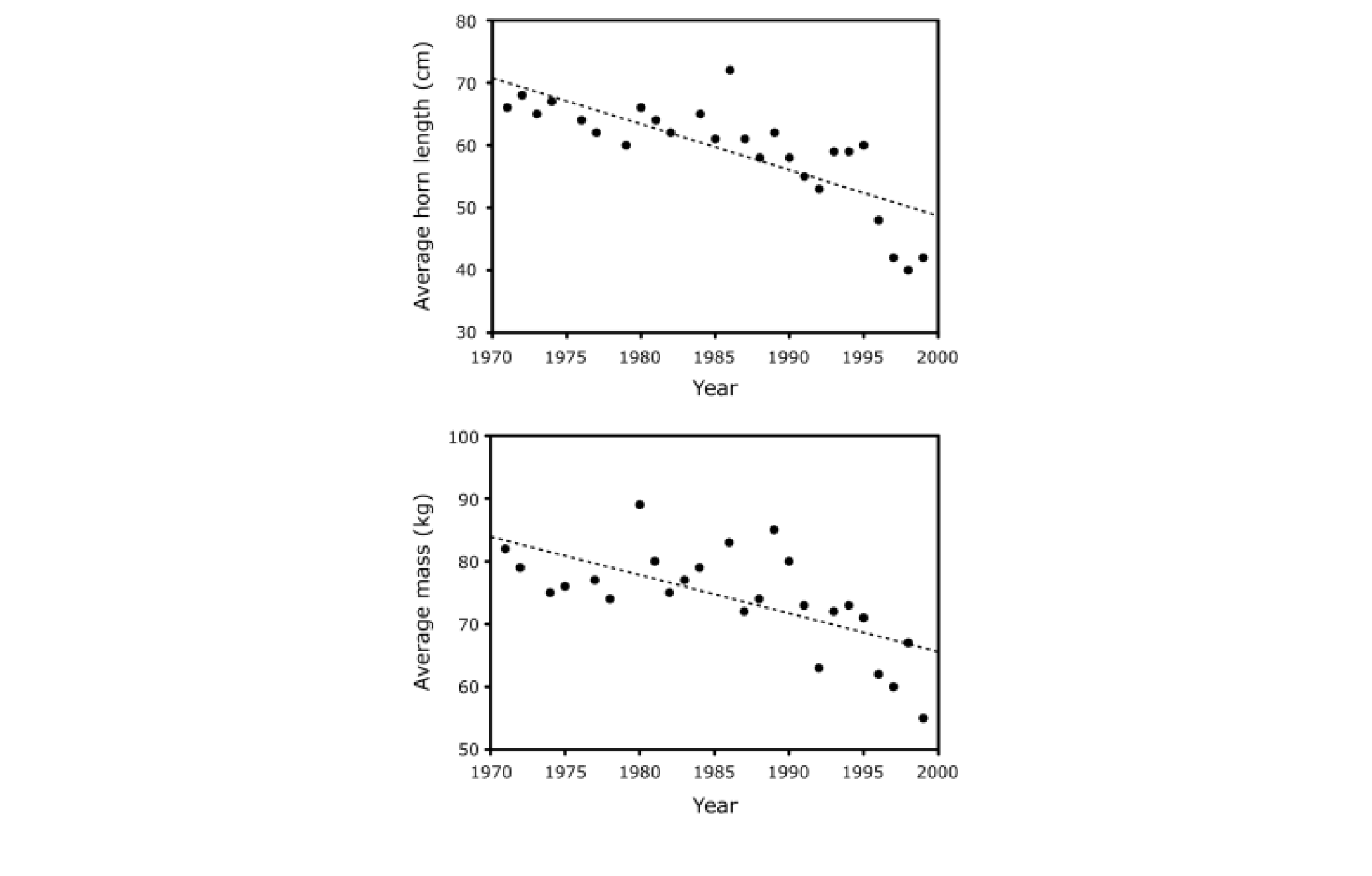 Figure 1.
Using the information and data, determine which of the statements are true or which are false.
Question reproduced from IBO 2018, Theoretical Paper 1, licensed under CC BY-NC-SA 4.0 - attributed to the International Biology Olympiad. Open the full exam PDF · Community solutions (unofficial)