Q42 - Ecological Pyramids of Energy and Biomass
One of the basic ways to illustrate trophic relationship in an ecosystem is to use pyramids of energy and biomass, which are the stack of rectangles. Each represents the amount of energy or biomass within one trophic level. We know a proportion of energy and biomass is lost from the ecosystem when transferring from one to the next level. Therefore, the size of each rectangle decreases when we move from one level to the level above it. Examples of pyramids schemes in different ecosystems. As you can see biomass pyramid can be inverted in some ecosystems.
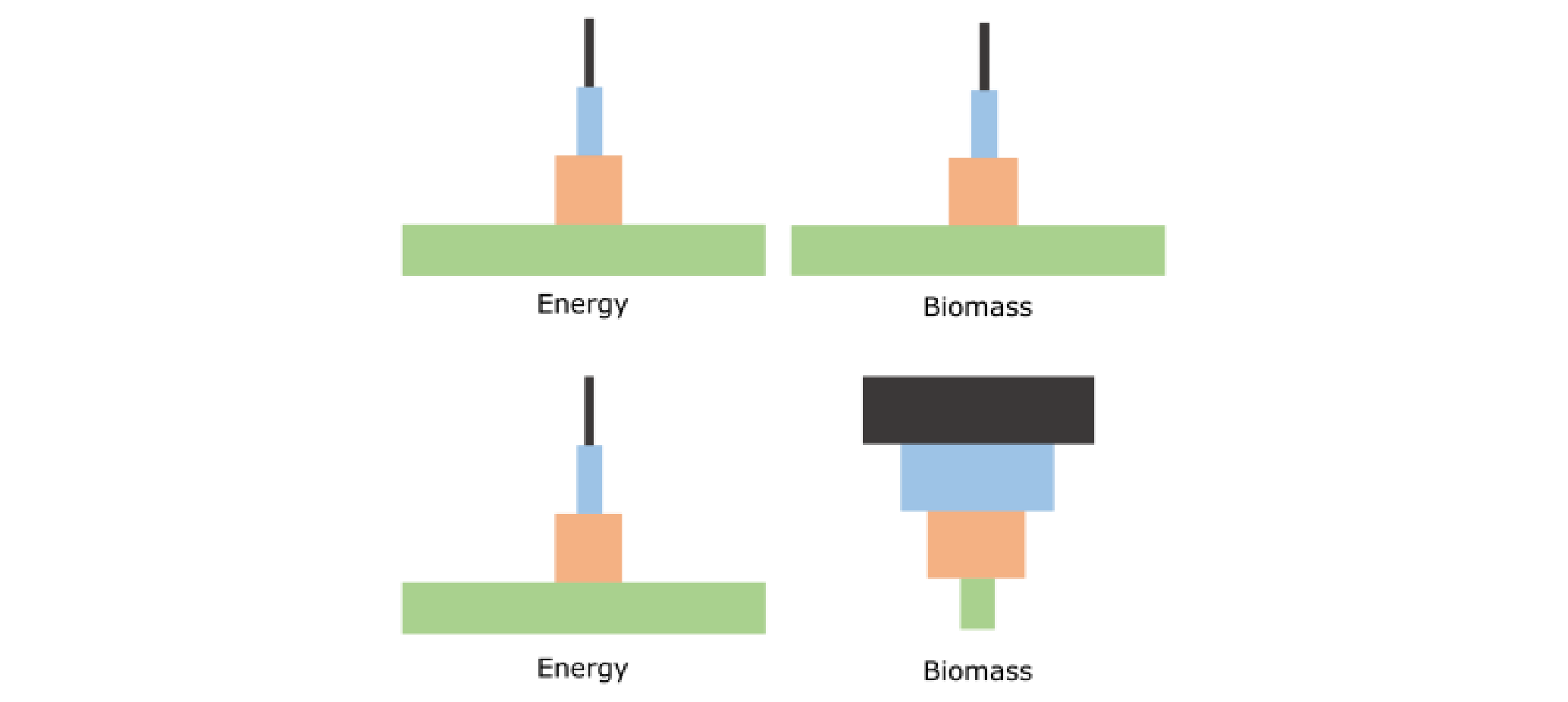 Figure 1.
Using the information and data, determine which of the statements are true or which are false.
Question reproduced from IBO 2018, Theoretical Paper 1, licensed under CC BY-NC-SA 4.0 - attributed to the International Biology Olympiad. Open the full exam PDF · Community solutions (unofficial)