Q17 - Ranking Organism Genome Sizes from a Photo Panel
With the progress of genome research, the genomes of many organisms have been analyzed, and it has been revealed that the genomes of organisms vary widely in size. Faster-growing organisms with a simpler structure tend to have smaller genomes. Most mammalian genomes range from 2.5 to 3.3 billion bases, and human genomes are about 3 billion bases. The photos show: A, a human; B, a water flea (Daphnia); C, budding yeast (SEM image); D, bacterial cells (light micrograph); E, a nematode worm.
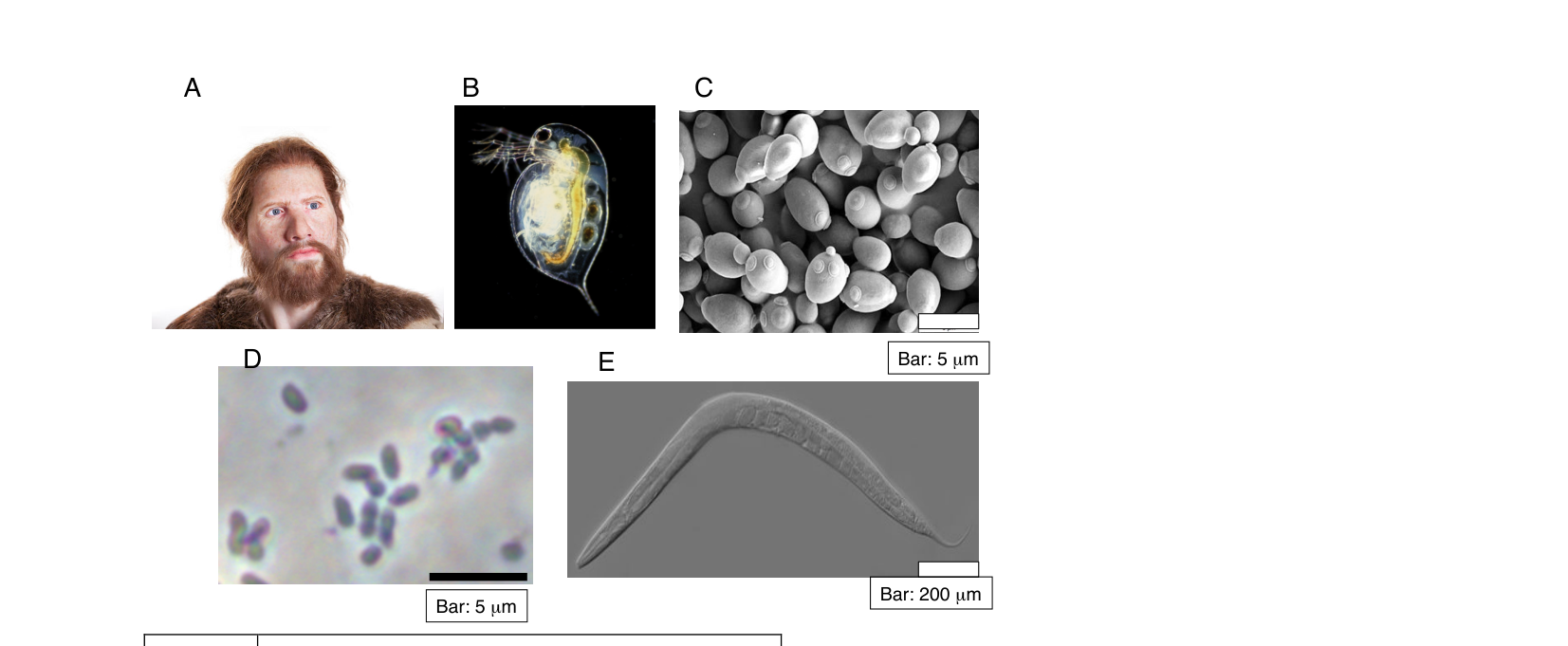 Figure 1.
Using the information and data, determine which of the statements are true or which are false.
Question reproduced from IBO 2020, Theoretical Exam 2, licensed under CC BY-NC-SA 4.0 - attributed to the International Biology Olympiad. Open the full exam PDF · Community solutions (unofficial)