Q27 - Saiga Antelope - Nose Adaptations for Cold, Dust, and Signalling
Saiga (Saiga tatarica) live in the deserts, semi-deserts, and steppes of Central Asia and Mongolia, where the climate is harsh, with cold winters and hot summers. They form large, nomadic herds, crossing large areas during migration - including swimming across large rivers. They are fast-moving, reaching speeds up to 70 km/h (commonly 50–60 km/h), and can run tens of kilometers with their heads lowered, producing large dust clouds in summer.
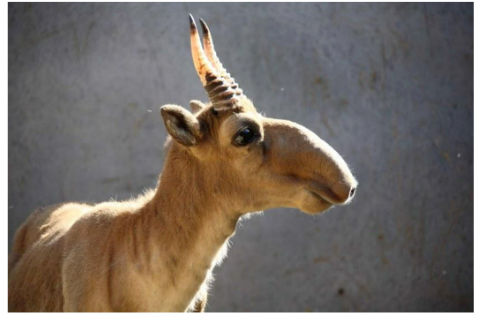 Figure 1. Male saiga.
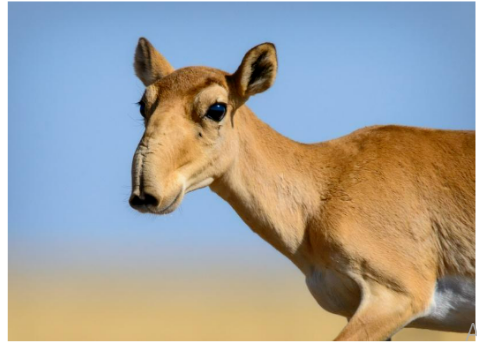 Figure 2. Female saiga.
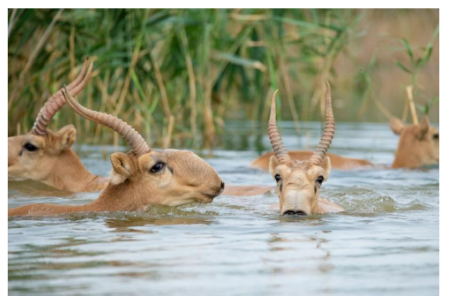 Figure 3. Saigas swim across a river during migration.
Using the information and figures, determine whether the following statements are true or false:
Question reproduced from IBO 2022, Theoretical Paper 1, licensed under CC BY-NC-SA 4.0 - attributed to the International Biology Olympiad. Open the full exam PDF · Community solutions (unofficial)