Q50 - Phytochrome Thermosensing
Phytochrome exists in two interconvertible forms: the inactive Pr form (absorbs red light) and the active Pfr form (absorbs far-red light).
Phytochrome interconversion involves three rate constants:
- k₁: Pr → Pfr (light-dependent, red light)
- k₂: Pfr → Pr (light-dependent, far-red light)
- k₃: Pfr → Pr (non-photochemical, thermal reversion)
Only k₃ is temperature-dependent: it increases at higher temperatures. k₁ and k₂ are unaffected by temperature.
Pfr is the active form that suppresses hypocotyl elongation in seedlings.
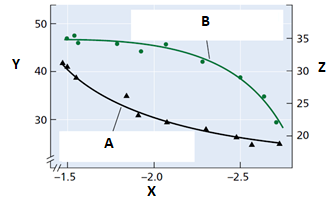
True or false?
Q50.1. The proportion of the Pfr form in total phytochrome molecules at equilibrium is larger at higher temperatures.
Q50.2. The smaller proportion of Pfr at higher temperature causes greater elongation of the hypocotyl.
Q50.3. Hypocotyl elongation in phytochrome-deficient mutant seedlings is expected to be similar to that of wild-type seedlings grown at low temperatures.
Q50.4. The effect of temperature on hypocotyl elongation is expected to diminish in total darkness.
Question reproduced from IBO 2023, Theoretical Paper 2, licensed under CC BY-NC-SA 4.0 - attributed to the International Biology Olympiad. Open the full exam PDF