Q27 - PCR Mapping of Genomic Rearrangements in Genes H and K
It is known that human genes H (located on chromosome 1) and K (located on chromosome 5), are highly prone to genomic rearrangements, such as deletions, translocations, duplications, and inversions. From a given population, three individuals (ID-1, ID-2, and ID-3) are known to have genomic rearrangements at these loci. Polymerase Chain Reaction (PCR) was performed to determine the type of rearrangement. Primers for PCR were indicated as small arrows in Figure 1A (the arrowhead denotes the 3’ end of the primer).
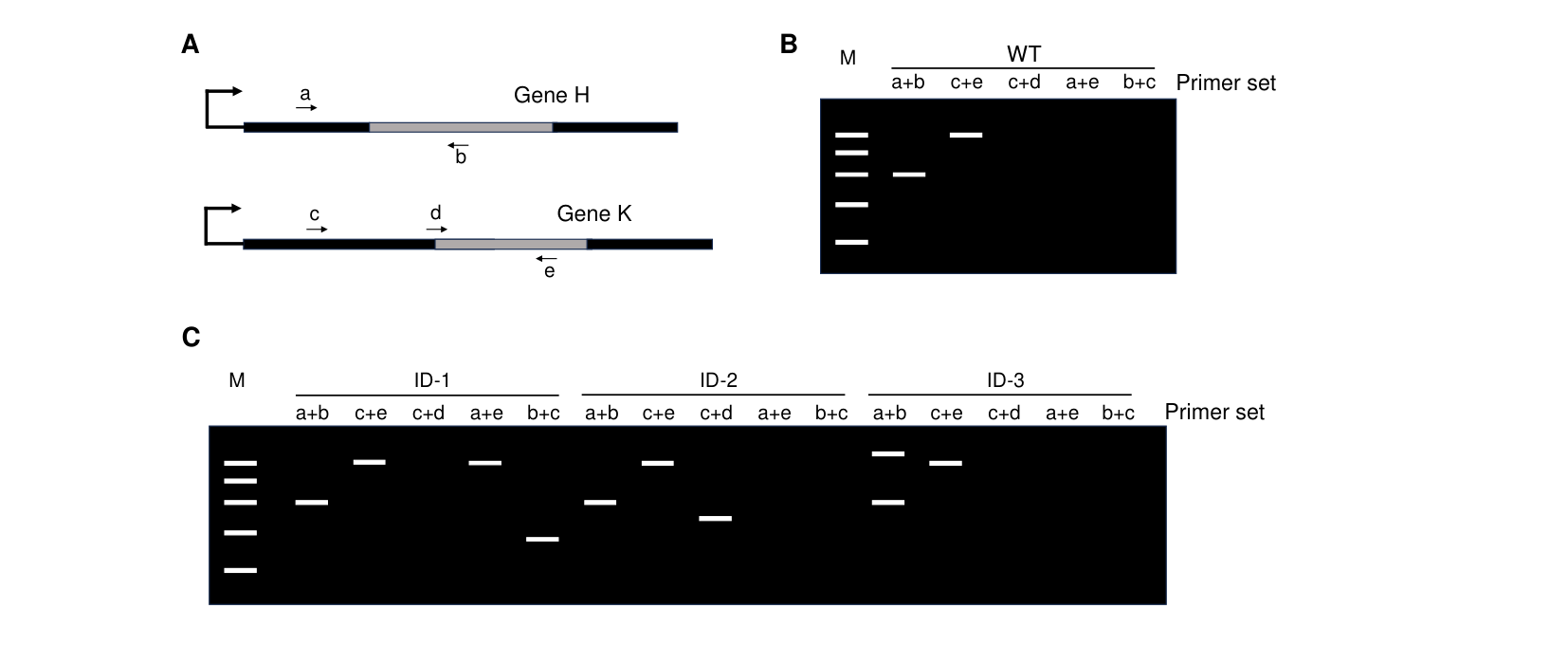 Figure 1. A. The structure of genes K and H, where black regions depict exons, while light gray regions are introns. Note that for both genes, the junction between depicted exons codes for an active site in their respective protein (enzyme) products. B. PCR results from a wild-type (WT) individual (M - DNA size marker). C. PCR results from three tested individuals (ID-1, ID-2, and ID-3). Note that the intensity of the bands does not represent the amount of DNA.
On your answer sheet, indicate “T” for true statements and “F” for false ones.
Question reproduced from IBO 2024, Theoretical Exam Part B, licensed under CC BY-NC-SA 4.0 - attributed to the International Biology Olympiad. Open the full exam PDF