Q16 - Nitrous Oxide Production by Bacteria in Zebra Mussels
Nitrous oxide (N2O) is a greenhouse gas, produced by bacteria through either nitrification or denitrification (Fig. A). Many aquatic invertebrates (e.g. zebra mussel) emit N2O, due to the activity of bacteria in their gut and the biofilm covering their shell (Fig. B, Table). A, pathways for N2O production in bacteria, with key genes amoA (encoding ammonia monooxygenase AMO, nitrification) and nirK (encoding nitrite reductase NIR, denitrification); B, N2O emission from living zebra mussels and shells dissected from living animals, incubated with (+ATU) or without (-ATU) allylthiourea, which is a specific inhibitor of nitrification.
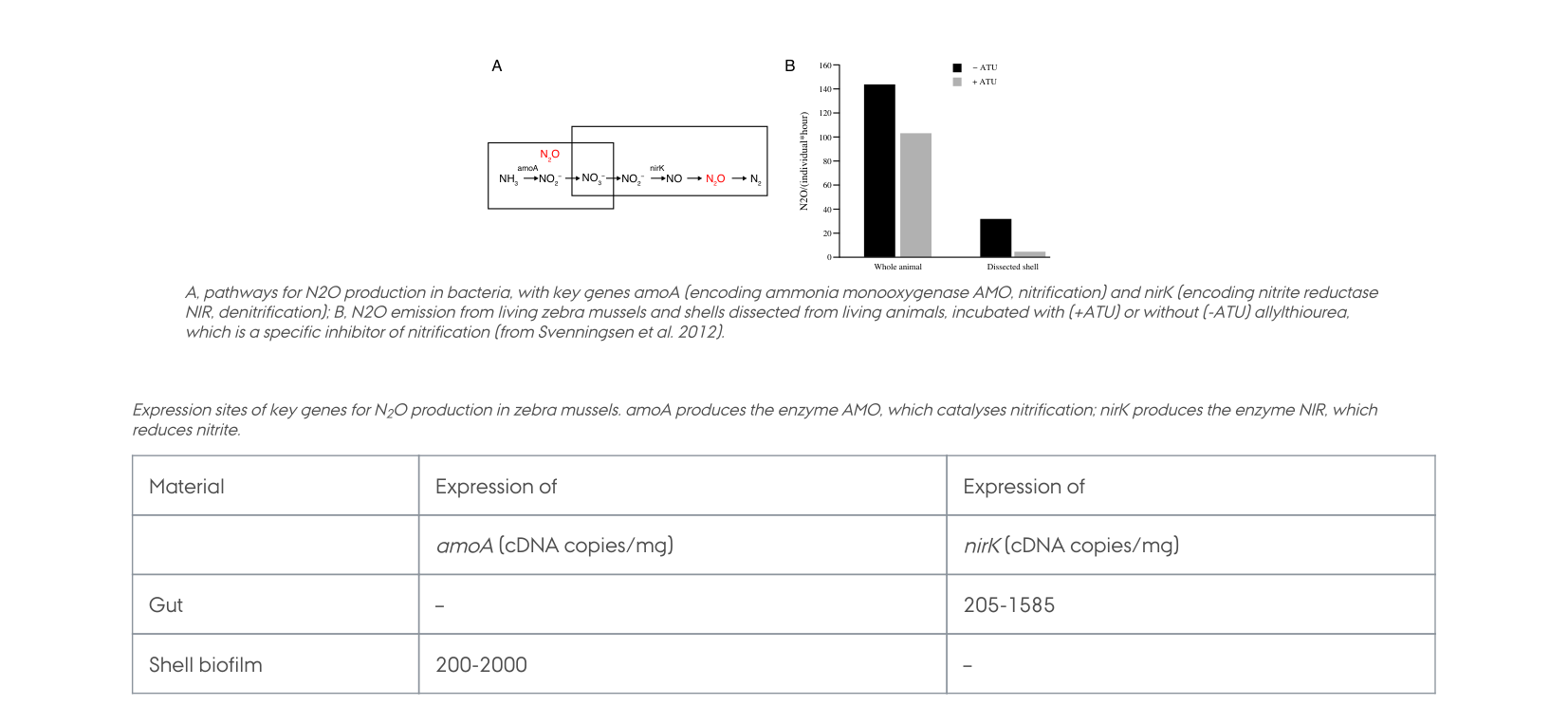 Figure 1.
Using the information and data, determine which of the statements are true or which are false.
Question reproduced from IBO 2015, Theoretical Exam A, licensed under CC BY-NC-SA 4.0 - attributed to the International Biology Olympiad. Open the full exam PDF · Community solutions (unofficial)