Q22 - Adipose Tissue as a Host Response to Skin Infection
Staphylococcus aureus (SA) causes skin infection in humans and is a common cause of death. Immediate protection or intervention by local epithelial cells restrict spread of infection. These cells produce antimicrobial peptides (amp), e.g. cathelicidin (Camp). A newly discovered host response to such infections is changes in subcutaneous adipose (fat) tissue (fig A-B). The antibacterial role of this was studied by using BADGE, an ether that inhibits adipogenesis (fig C-E) A, mouse skin infected with SA and compared to control (ctrl); B, change in number and size of adipocytes 3 days after SA infection. C-D, effects of BADGE on wound size and SA CFU (the ether BADGE inhibits adipogenesis, CFU=Colony-Forming Units); E, effects of + and − Camp.
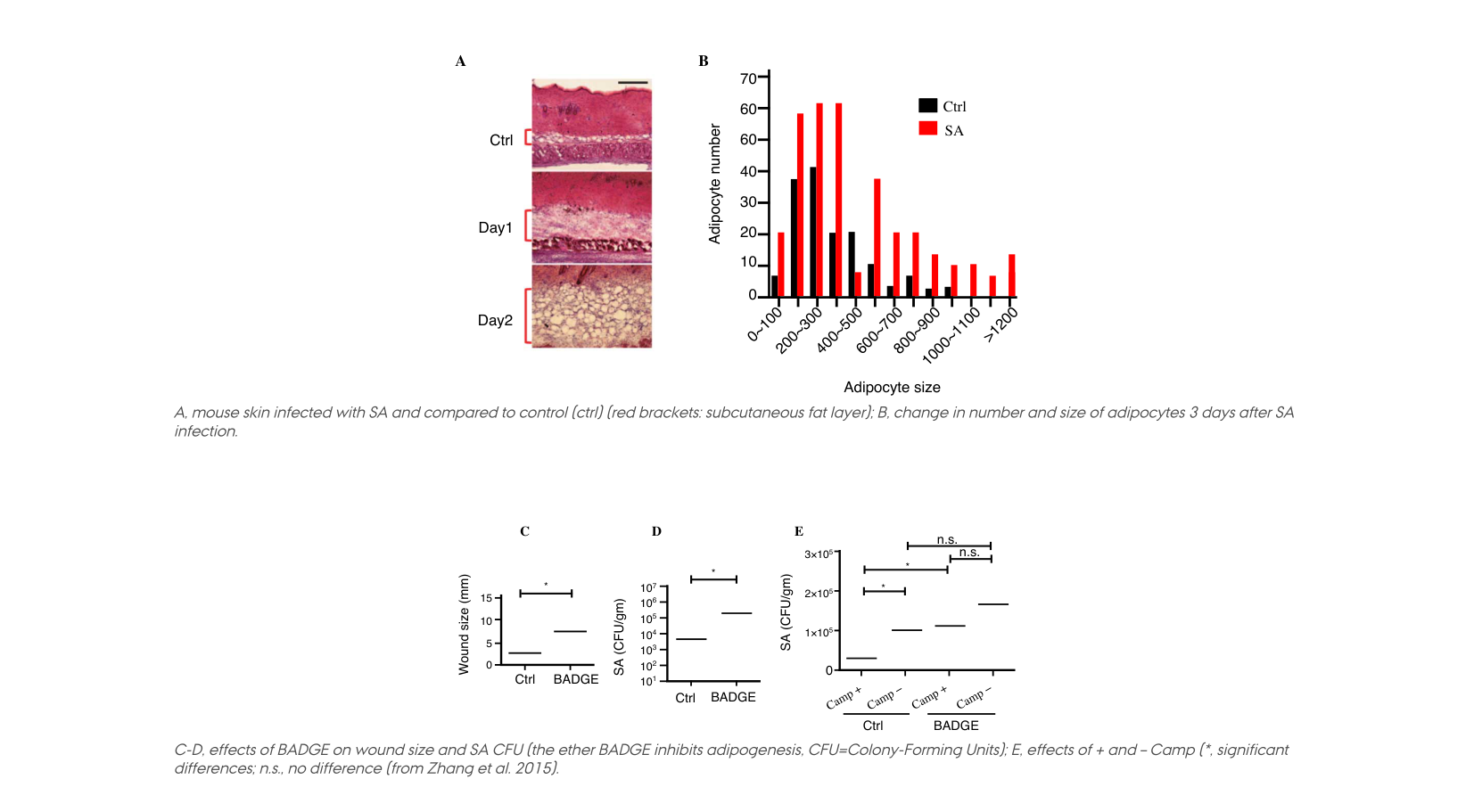 Figure 1.
Using the information and data, determine which of the statements are true or which are false.
Question reproduced from IBO 2015, Theoretical Exam A, licensed under CC BY-NC-SA 4.0 - attributed to the International Biology Olympiad. Open the full exam PDF · Community solutions (unofficial)