Q32 - Stress Behaviour and Cortisol in Farmed Mink
In farms, a study of mink looked at how reduced welfare, e.g. postponed feeding, led to abnormal behaviours, such as stereotypic pacing and tail-chewing. Indicators of abnormal behaviours could also be elevated levels of the hormone cortisol and increased fearfulness. Based on their behavioural response to stress, minks were classified into three groups, NST = no stereotypic pacing, ST1 = low level of pacing and ST2 = high level of pacing. The differences between these groups of minks in their stress responses to postponed feeding are shown in figures A and B. A, frequency of stereotypic pacing, caused by postponed feeding; B, mean cortisol concentration in the two stereotypic groups (ST1 and ST2) and in the control (NST), and in absence (NC) or presence of tail-chewing (TC).
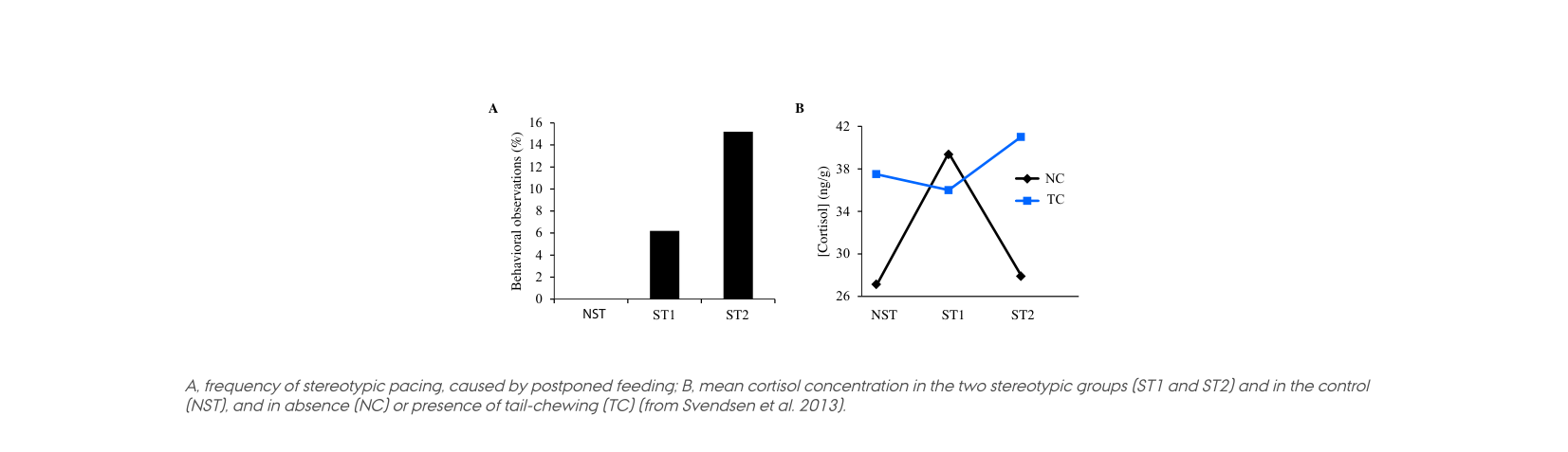 Figure 1.
Using the information and data, determine which of the statements are true or which are false.
Question reproduced from IBO 2015, Theoretical Exam A, licensed under CC BY-NC-SA 4.0 - attributed to the International Biology Olympiad. Open the full exam PDF · Community solutions (unofficial)