Q41 - Complementation Analysis of the Arginine Biosynthesis Pathway
In mold/mould, synthesis of the amino acid arginine requires prior conversion of a precursor to ornithine, which is then converted to citrulline, which further is converted to arginine. Each of these three steps is catalyzed by a separate enzyme, coded for by a separate gene (Fig.). A, biosynthetic pathway for arginine in mold; B, experimental set-up to confirm pathway; dark brown stripe denotes mold growth. The wild type grows on minimal medium, while the mutants only grow with addition of specific nutrients.
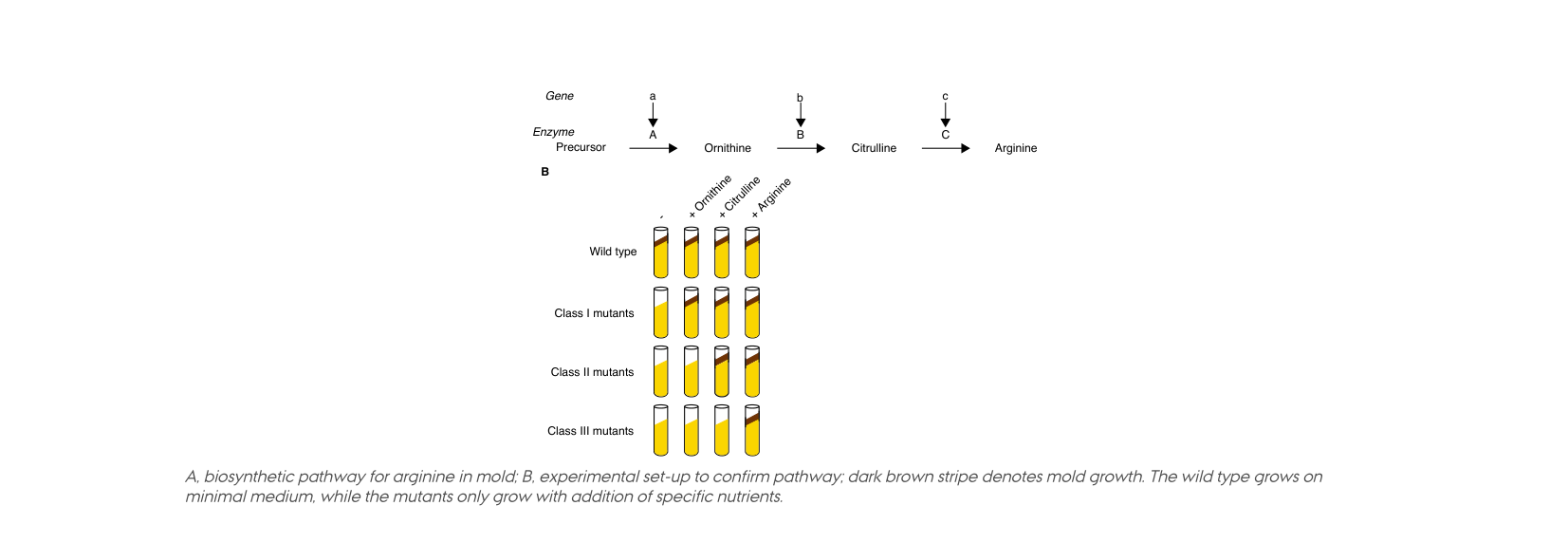 Figure 1.
Using the information and data, determine which of the statements are true or which are false.
Question reproduced from IBO 2015, Theoretical Exam A, licensed under CC BY-NC-SA 4.0 - attributed to the International Biology Olympiad. Open the full exam PDF · Community solutions (unofficial)