Q21 - A Bacterium-Nematode-Fungus Chemical Signaling Chain
Bacteria are the food of many nematodes, and many bacteria have a toxic secretion defence. Nematodes are also preyed upon, e.g. by the fungus Arthrobotrys oligospora (Ao). This fungus lives in cow dung and is either saprophytic or predatory. When it encounters a nematode, it becomes predatory by producing traps to capture nematodes (Fig. A). This shift is induced by chemicals, e.g. urea produced by bacteria, e.g. Stenotrophomonas maltophilia (Sm) (bacterial urea production below 300 mg/L soil). The interactions between bacterium, fungus, and nematode were studied (Fig.).
A, trap-formation by Ao near cow dung on a plate; B, urea is produced from arginine and formation is catalysed by arginase, being controlled by the gene arcA; SmΔarcA is a bacterial strain without arcA (WT is wild type); LB and MM are nutrient-rich and -poor media, respectively; C, trap number as a function of urea concentration; D, arcA is expressed in bacteria, when nematodes are added; E, urea levels in bacteria with and without nematodes. (from Wang et al. 2014).
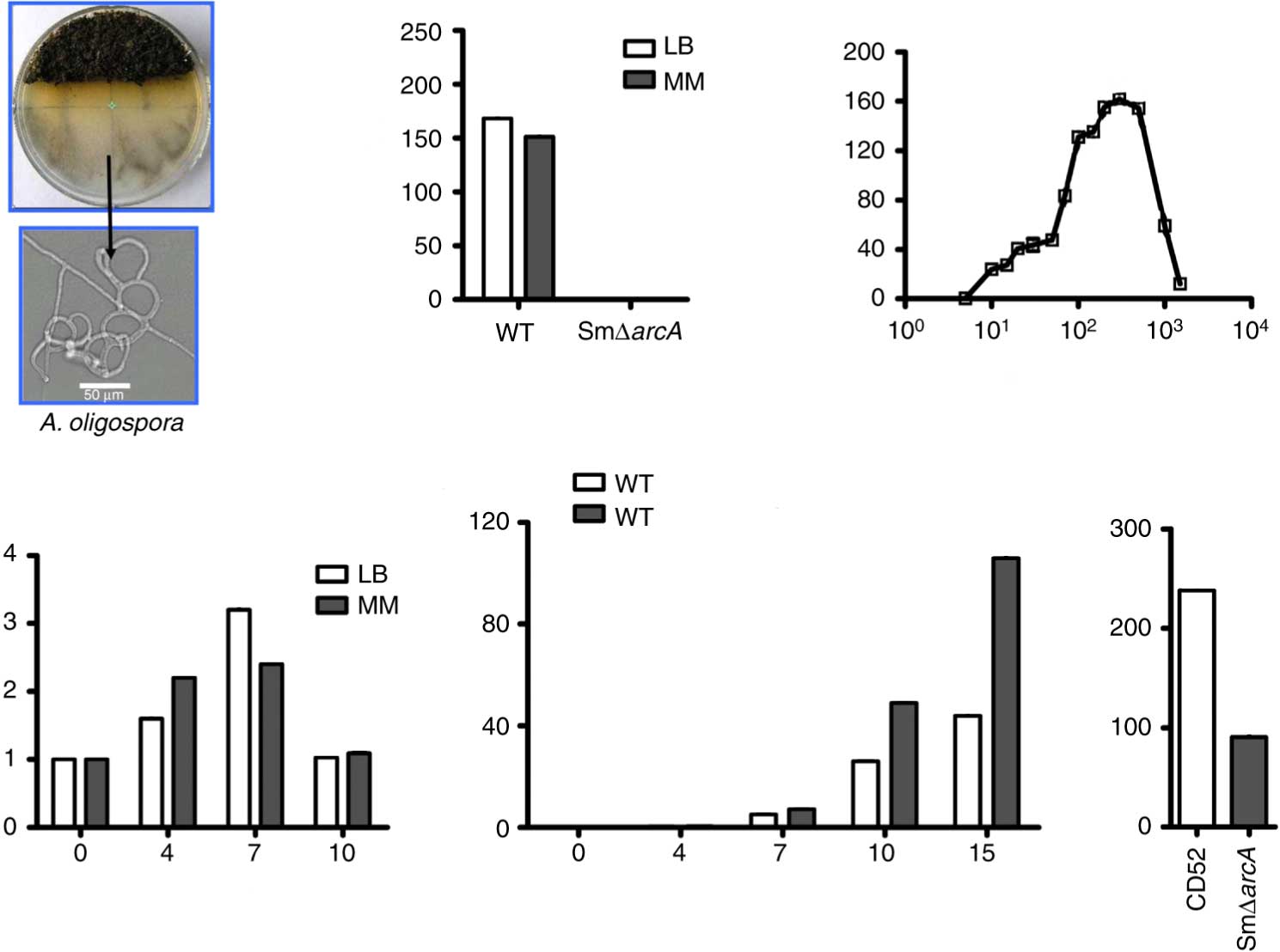 Figure 1.
Using the information and data, determine which of the statements are true or which are false.
Question reproduced from IBO 2015, Theoretical Exam B, licensed under CC BY-NC-SA 4.0 - attributed to the International Biology Olympiad. Open the full exam PDF · Community solutions (unofficial)