Q22 - Stem Cell and Islet Co-transplantation for Diabetes
Differentiation of a kind of stem cells (mesenchymal stromal cells MSC) derived from adipose rat tissue (A-MSC) and bone marrow (B-MSC) was analyzed in vitro and in vivo. Diabetic rats (STZ rats) were used and MSCs were co-transplanted with pancreatic islets to confirm the in vitro results (Fig. A).
A, in vitro: insulin secretion levels after 38 days of culture of islets and stem cells
The insulin-producing capacities of the islets transplanted with stem cells were compared and reduction of hyperglycemia symptoms in the rats was examined (Fig. B-C).
B, in vivo: body weight change after transplantation of islets into the rats. Body weight change (%) compared to the time of transplantation (day 0); C, in vivo: Glucose tolerance test was performed after injection of 2 g glucose/kg rat (from Karaoz et al. 2013).
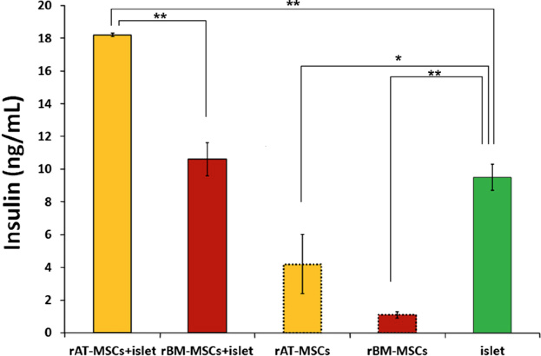 Figure 1.
Using the information and data, determine which of the statements are true or which are false.
Question reproduced from IBO 2015, Theoretical Exam B, licensed under CC BY-NC-SA 4.0 - attributed to the International Biology Olympiad. Open the full exam PDF · Community solutions (unofficial)