Q13 - A dme Mutant and Nitrogen Fixation in Soybean Root Nodules
The bacterium Bradyrhizobium japonicum can infect soybean (Glycine max) roots and form nodules. The nitrogen fixation catalyzed by nitrogenase occurs in the nodules and the nitrogenase activity can be measured easily by acetylene reduction instead of nitrogen reduction. Scientists generated a defective mutation of NAD+-dependent malic enzyme (dme mutant), the enzyme that generates pyruvate and NADH, and infected soybean seedling roots with wildtype and mutant bacteria. The seedlings were grown in nitrogen-free media. After 14 and 28 days of inoculation, the number and weight of nodules in the seedlings and acetylene reduction activity were recorded.
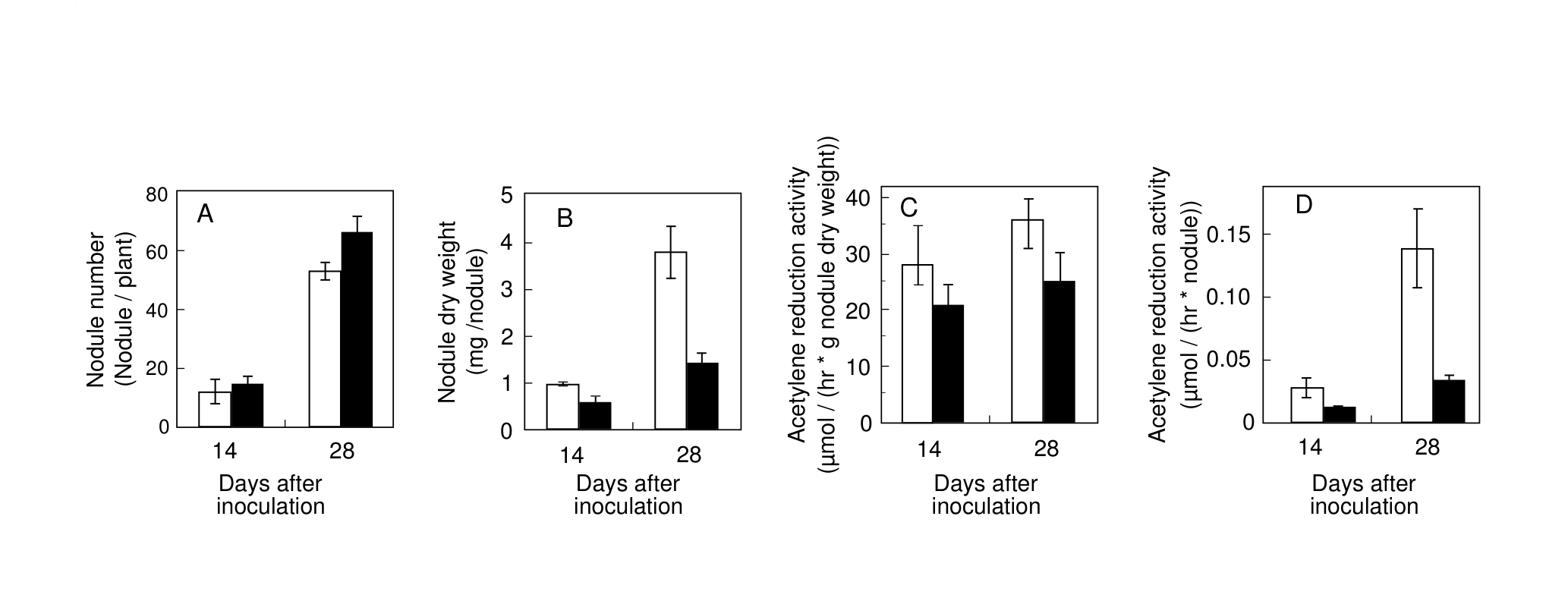 Figure 1.
Using the information and data, determine which of the statements are true or which are false.
Question reproduced from IBO 2016, Theoretical Paper A, licensed under CC BY-NC-SA 4.0 - attributed to the International Biology Olympiad. Open the full exam PDF · Community solutions (unofficial)