Q70 - 4-1BB/4-1BBL Signaling in Atherosclerosis, Autoimmunity, and Graft Rejection
The glycoprotein 4-1BB is a receptor that is highly expressed on the surface of active T-cells. The 4-1BB ligand (4-1BBL) is a molecule that binds to and activates 4-1BB. It is found strongly expressed on antigen-presenting cells. Bidirectional signals of 4-1BB and 4-1BBL interaction increase the activity of white blood cells and increase the production and secretion of cytokines, such as MCP-1 which promotes the infiltration of leukocytes (Figure Q.70). Currently, many studies have shown a relationship between the signaling pathways via 4-1BB/4-1BBL interaction and several human diseases, including those related to metabolism.
Figure Q.70
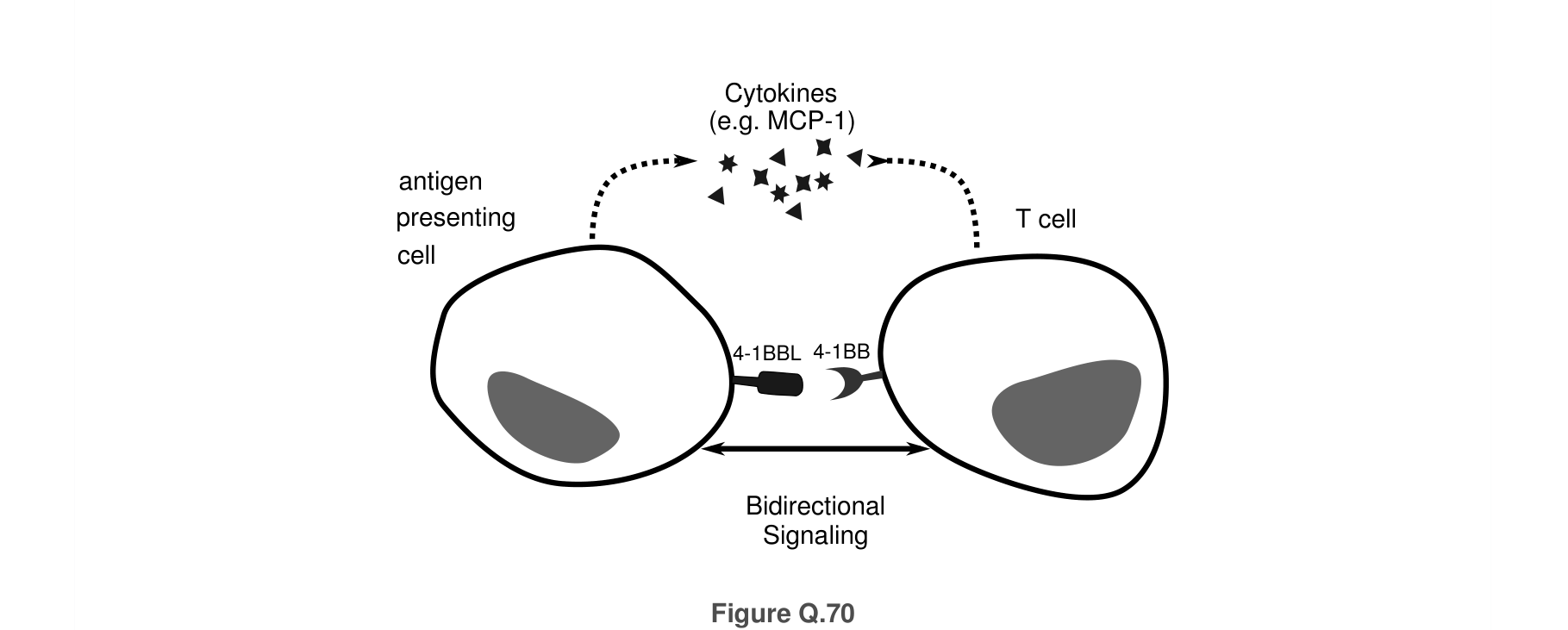 Figure 1.
Using the information and data, determine which of the statements are true or which are false.
Question reproduced from IBO 2016, Theoretical Paper B, licensed under CC BY-NC-SA 4.0 - attributed to the International Biology Olympiad. Open the full exam PDF · Community solutions (unofficial)