Q69 - Localizing Drug Targets in the Parietal Cell Acid-Secretion Pathway
Figure Q.69 shows the regulation of HCl secretion in the parietal cell of the stomach.
Figure Q.69
Drugs 1, 2, 3, and 4 inhibit gastric acid secretion differently in vivo via one of the four pathways: inactivating the H+/K+ ATPase, blocking the Histamine 2 receptor, blocking Gastrin receptor, and blocking Acetylcholine (Ach) receptor.
A set of experiments were conducted to determine in which pathway these drugs inhibit gastric acid secretion. Parietal cells were isolated and cultured in different media. Each medium contained one of the four drugs. Each drug-containing medium was added with one of three compounds (Histamine, Gastrin, Ach). The HCl secretion of parietal cells in the cultures was determined. The following table shows the results of the experiments (-: no HCl secretion; +: HCl secretion; ?: not shown).
| No drug | Drug 1 | Drug 2 | Drug 3 | Drug 4 | |
|---|---|---|---|---|---|
| No addition | - | - | - | - | - |
| Histamine added | ? | ? | ? | ? | - |
| Gastrin added | ? | ? | ? | + | ? |
| Ach added | + | - | ? | ? | - |
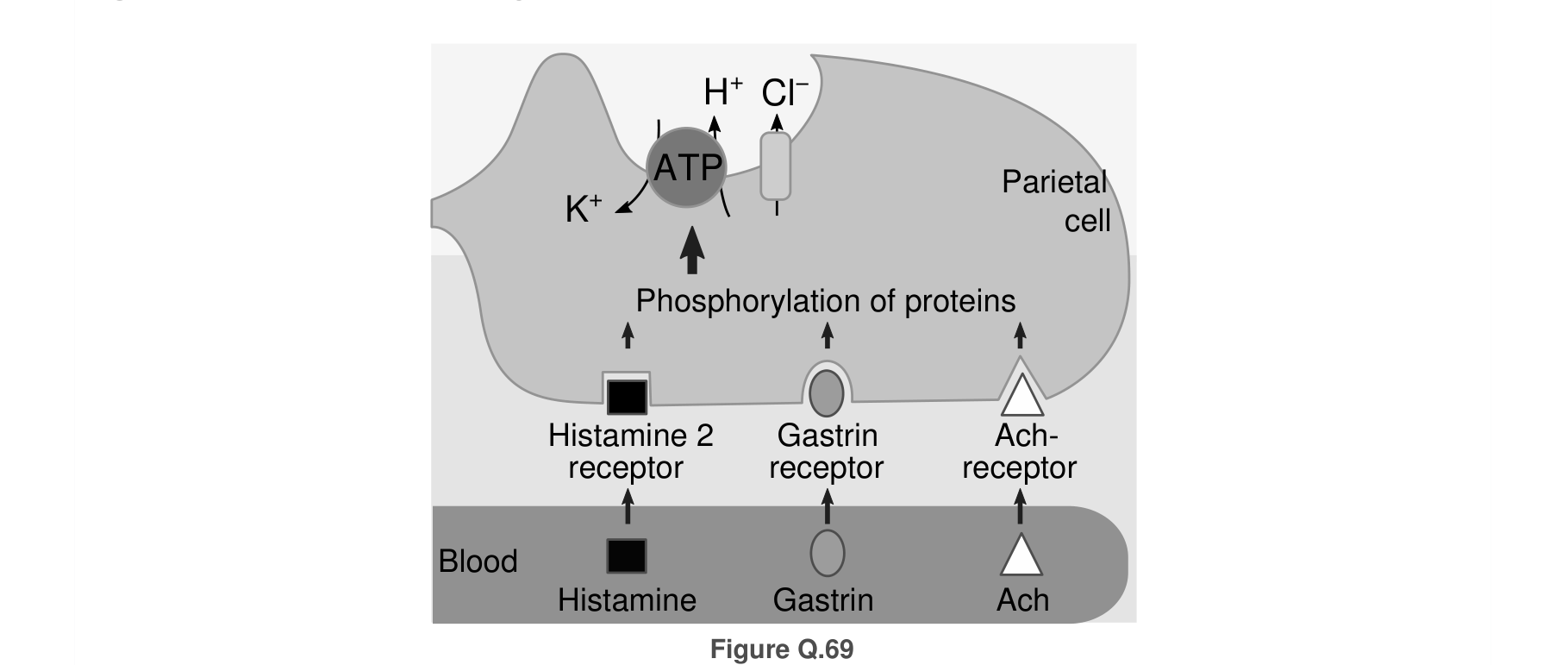 Figure 1.
Using the information and data, determine which of the statements are true or which are false.
Question reproduced from IBO 2016, Theoretical Paper B, licensed under CC BY-NC-SA 4.0 - attributed to the International Biology Olympiad. Open the full exam PDF · Community solutions (unofficial)