Q58 - Genome Segmentation and Subtype Diversity in Influenza A
Influenza A genome consists of 8 separate single stranded RNA molecules, which encode a total of 11 viral proteins. Influenza A viruses are categorized by their two surface antigens, the hemagglutinin (H), of which there are 18 different subtypes (H1-18); and neuraminidase (N), of which there are 11 different subtypes (N1-11) (Fig.Q.58A). The influenza A virus life cycle is presented in Fig. Q.58B.
Figure Q.58 Influenza A virus: (A) virus structure and (B) virus life cycle.
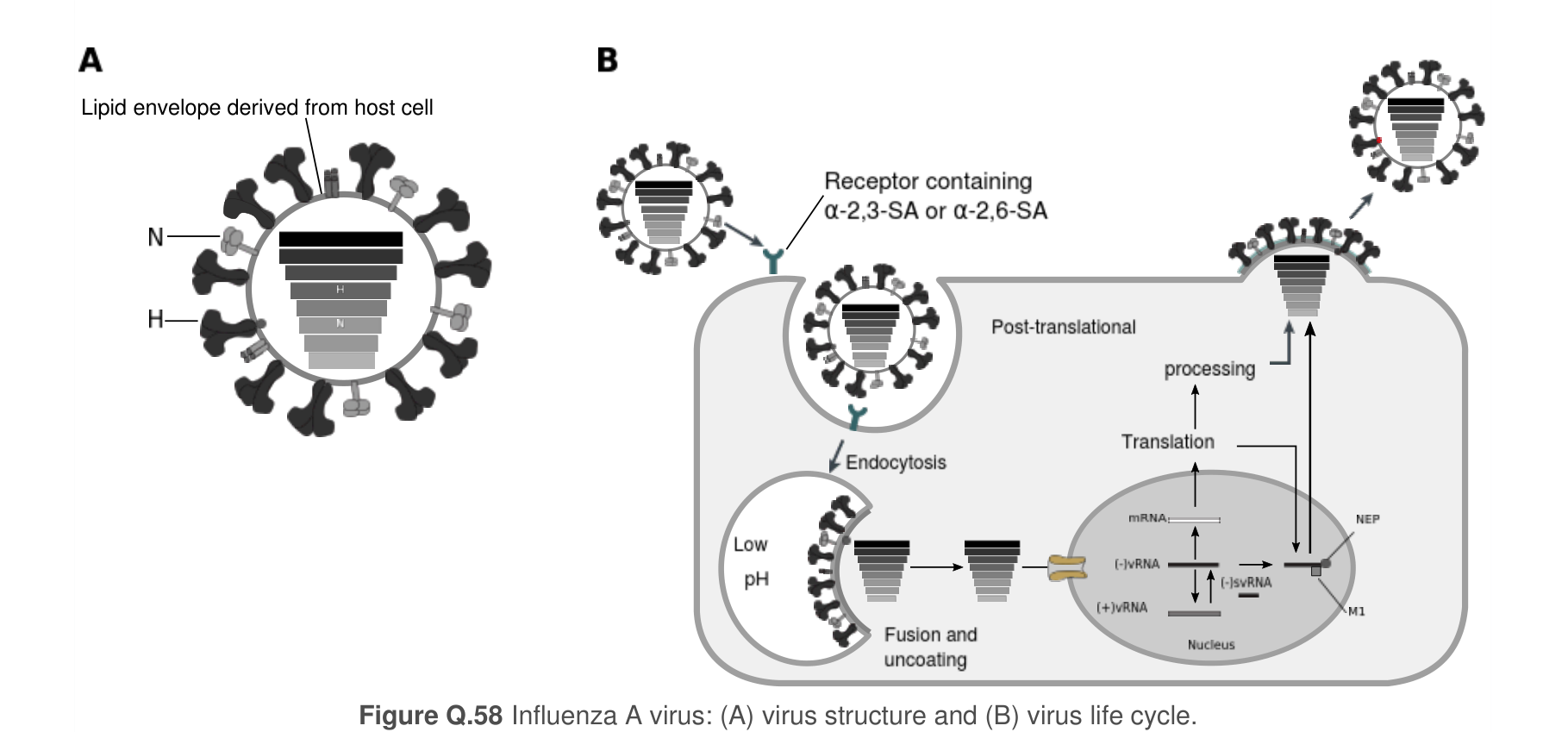 Figure 1.
Using the information and data, determine which of the statements are true or which are false.
Question reproduced from IBO 2016, Theoretical Paper B, licensed under CC BY-NC-SA 4.0 - attributed to the International Biology Olympiad. Open the full exam PDF · Community solutions (unofficial)