Q33 - Parabiosis Reveals a Circulating Satiety Hormone in Obese Mice
Sir Frederick Banting (1891-1941) and John Macleod (1876-1935) discovered insulin and invented modern diabetes treatment. This inspired similar investigations into body weight homeostasis and obesity: two mouse (Mus musculus) lines (obese; Ob, & diabetic; Db) have identical over-eating phenotypes. Each is deficient for a single, but different, gene. Damaging the arcuate nucleus in the brain, which is the structure soley responsible for regulating the sensation hunger, produces a similar phenotype. Mice were joined surgically, allowing a small amount of blood to flow between them, and then observed.
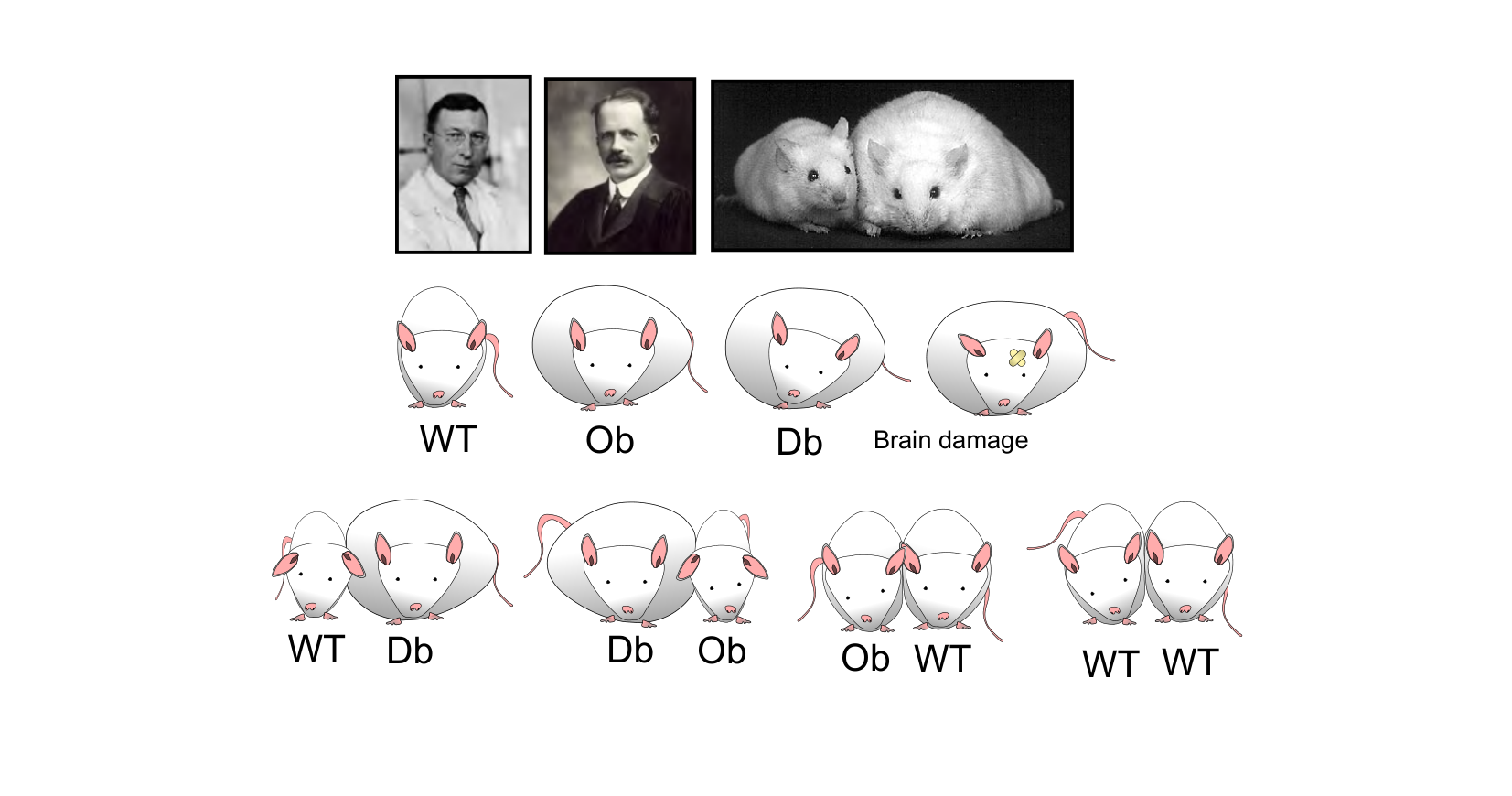
Using the information and data, determine which of the statements are true or which are false.
Question reproduced from IBO 2017, Theoretical Exam A, licensed under CC BY-NC-SA 4.0 - attributed to the International Biology Olympiad. Open the full exam PDF · Official answer key & worked solutions