Q34 - Contrasting N:P Limitation Across European Coastal Waters
The use of fertilisers, and release of sewage, have altered the balance of nitrogen and phosphorus based nutrients in the environment. Additionally, nitrogen oxides from pollution dissolve in rain to form acids. Growing algae incorporates an average of 16 nitrogen atoms per phosphorus atom, and eutrophication occurs when algal decomposition depletes oxygen. In 1957, the River Thames was declared ‘biologically dead’, without oxygen, but is now among the world’s healthiest major rivers. Phosphorus availability (1), and nitrogen:phosphorus molar ratio (2) was measured across Northern Europe.
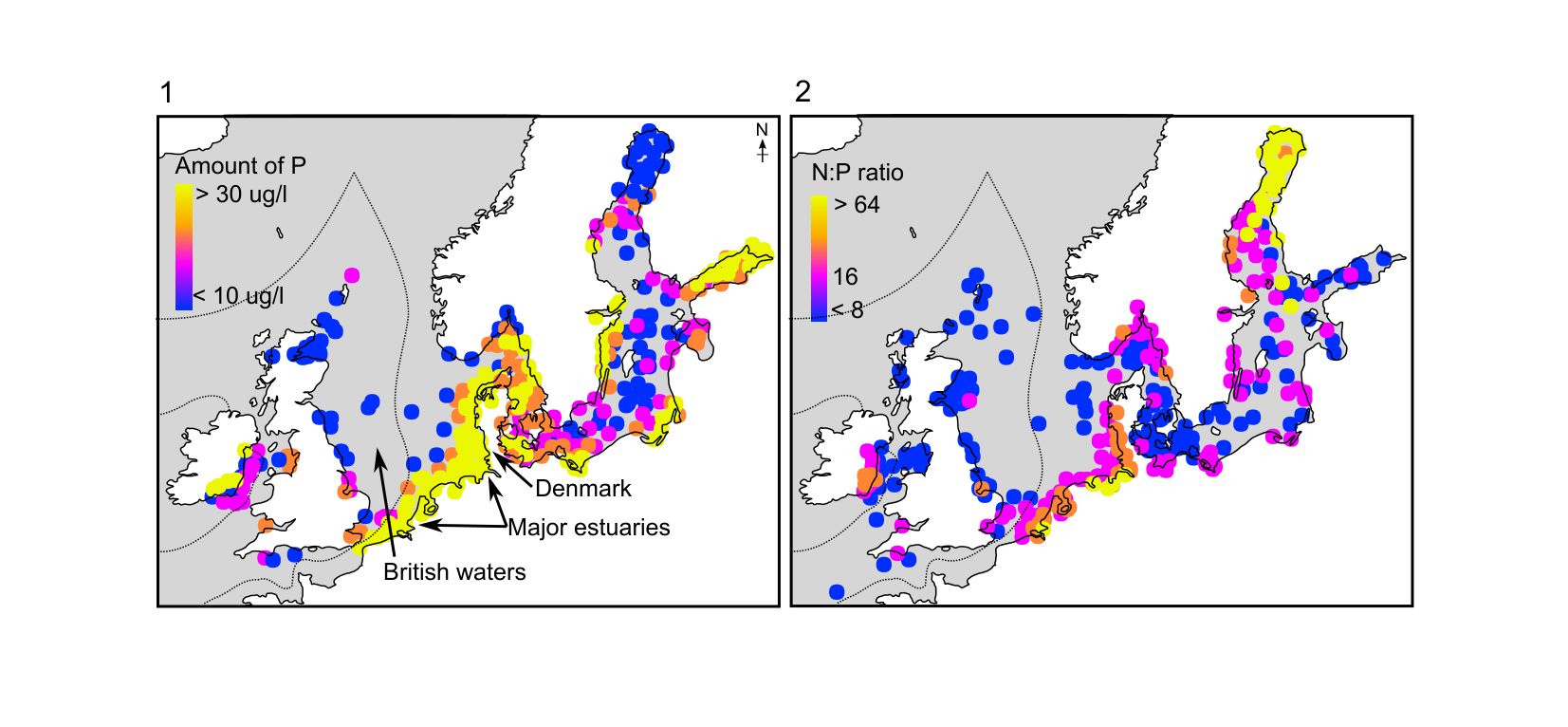
Using the information and data, determine which of the statements are true or which are false.
Question reproduced from IBO 2017, Theoretical Exam A, licensed under CC BY-NC-SA 4.0 - attributed to the International Biology Olympiad. Open the full exam PDF · Official answer key & worked solutions