Q10 - Why the Heart Can't Suck Blood: The Frank-Starling Mechanism
William Harvey (1578-1657) discovered that the heart pumps blood around the body in a circuit. Ernest Starling (1866-1927) discovered many of the fundamental properties of the circulatory system, including how cardiac output (the amount of blood pumped in a given time) is controlled. Starling completely removed a beating heart from the body, and attached it to an apparatus that allowed him to alter the pressure of incoming ‘venous’ (1) or outgoing ‘arterial’ blood (2). He then measured cardiac output. Both the left and right-sides of the heart gave similar results.
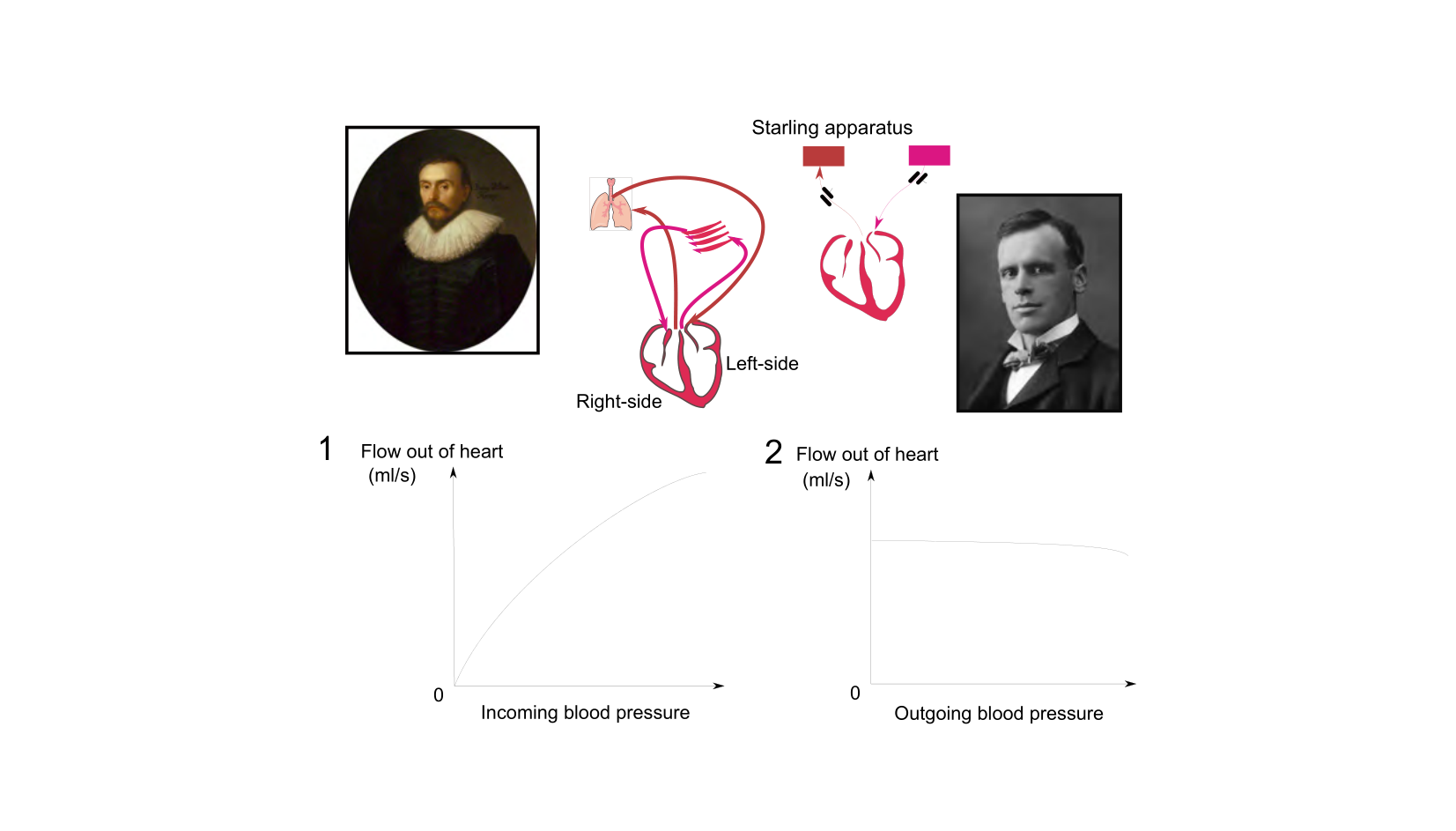
Using the information and data, determine which of the statements are true or which are false.
Question reproduced from IBO 2017, Theoretical Exam B, licensed under CC BY-NC-SA 4.0 - attributed to the International Biology Olympiad. Open the full exam PDF · Official answer key & worked solutions