Q24 - Reading Cell Identity and Function from Testis Ultrastructure
Robert Hooke (1635-1703) popularised microscopy in his famous book Micrographia, and invented the term ‘cells’. Analysing the size and shape of cells indicates their identity, whilst the appearance of their nucleus can indicate how transcriptionally active a cell is, or whether it is dividing. Specific junctions between cells allow internal substances to be transferred between them, or external substances to be trapped behind them. Testes have a distinct appearance under electron microscopes, as shown. Germ cells (which could pass their genetic material to the next generation) may undergo meiosis, and gradually adopt a morphology specialised for motility: these mature sperm are released into the centre of fluid filled tubes, in a process that happens in continuous waves.
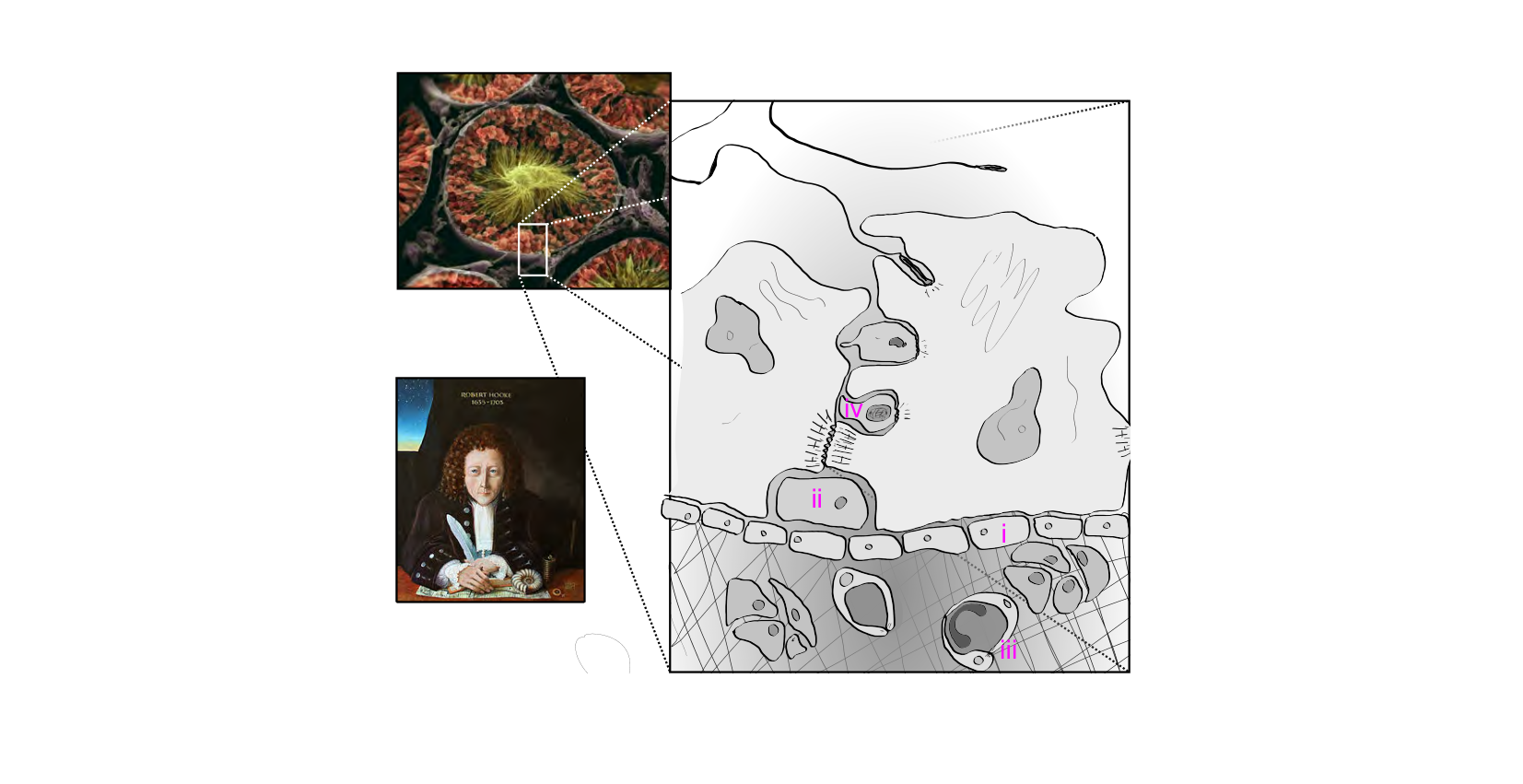
Using the information and data, determine which of the statements are true or which are false.
Question reproduced from IBO 2017, Theoretical Exam B, licensed under CC BY-NC-SA 4.0 - attributed to the International Biology Olympiad. Open the full exam PDF · Official answer key & worked solutions