Q28 - Cytoplasmic Reprogramming and the Persistence of Cell Identity
Sir John Gurdon (1933-present) took differentiated cells from tadpoles (1) or frogs (2, 3), and transferred their nuclei to enucleated eggs. These eggs were allowed to develop (1, 2), or the nuclei were passaged through more enucleated eggs (3). He was able to artificially clone animals (Xenopus laevis) for the first time.
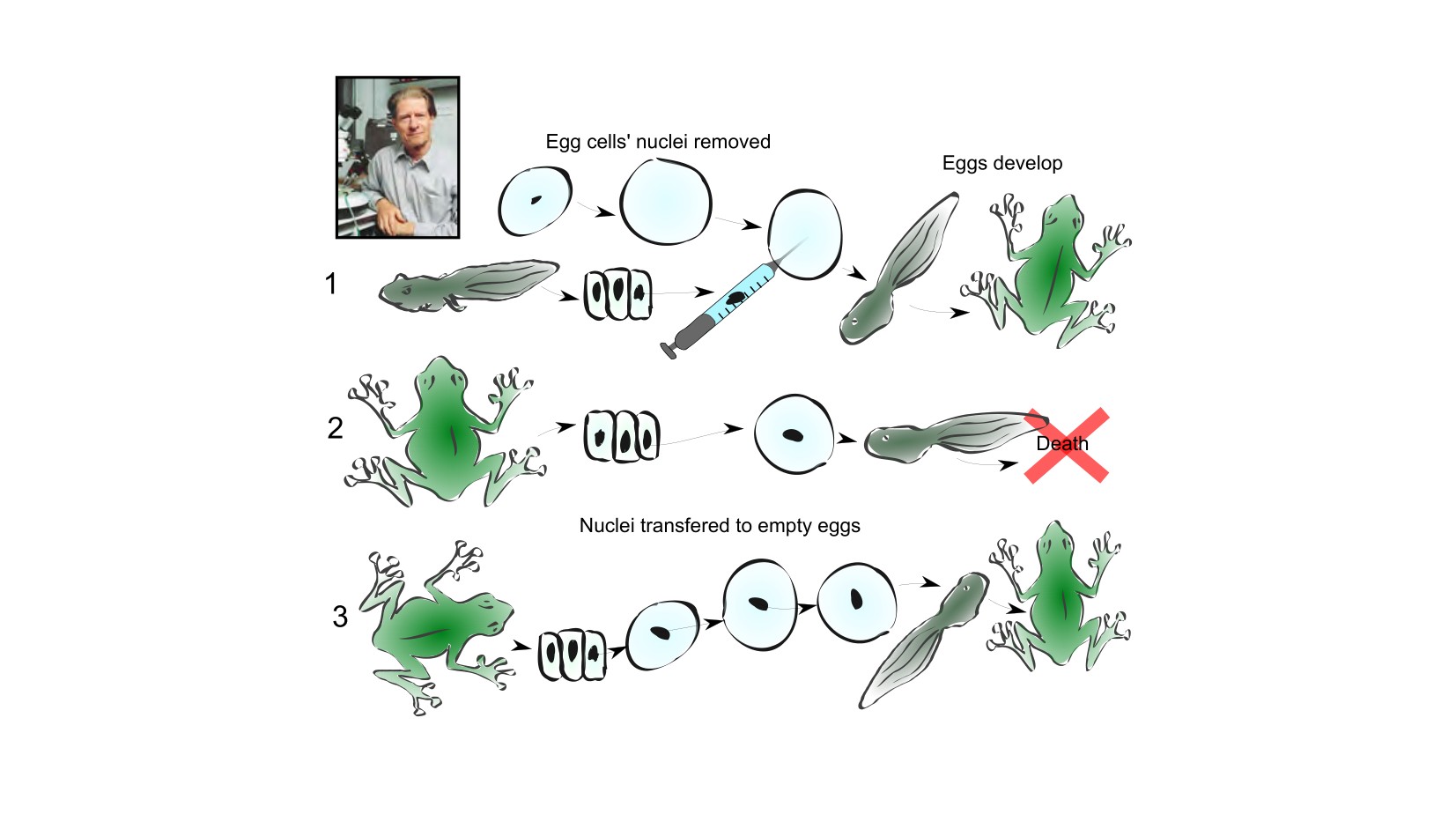
Using the information and data, determine which of the statements are true or which are false.
A. Gurdon proved adult cells contain all the DNA required by the fetus.
B. Cytoplasmic factors are sufficient to regulate cell type.
C. The most powerful (irreversible) regulators of cell type are turned on early in development.
D. Factors which determine cell type can take a long time to act on some genes.
Question reproduced from IBO 2017, Theoretical Exam B, licensed under CC BY-NC-SA 4.0 - attributed to the International Biology Olympiad. Open the full exam PDF · Official answer key & worked solutions