Q17 - Cardiac Cycle and Amygdala Fear Response
Perception of the emotional stimuli is a reciprocal process between the brain and the heart. In an experimental task, pictures depicting facial expressions were quickly and sequentially presented to the subjects at different phases of the cardiac cycle. Participants then rated the emotional intensity of the faces in a scale of 0 to 100. Given the role of the amygdala in the process of fear, the amygdala response was measured in normal individuals and subjects with pure autonomic failure (PAF) at the time of presenting facial expression images (using the fMRI method). The results of the study are as follows. (Consider p < 0.05 indicates significant difference between groups).
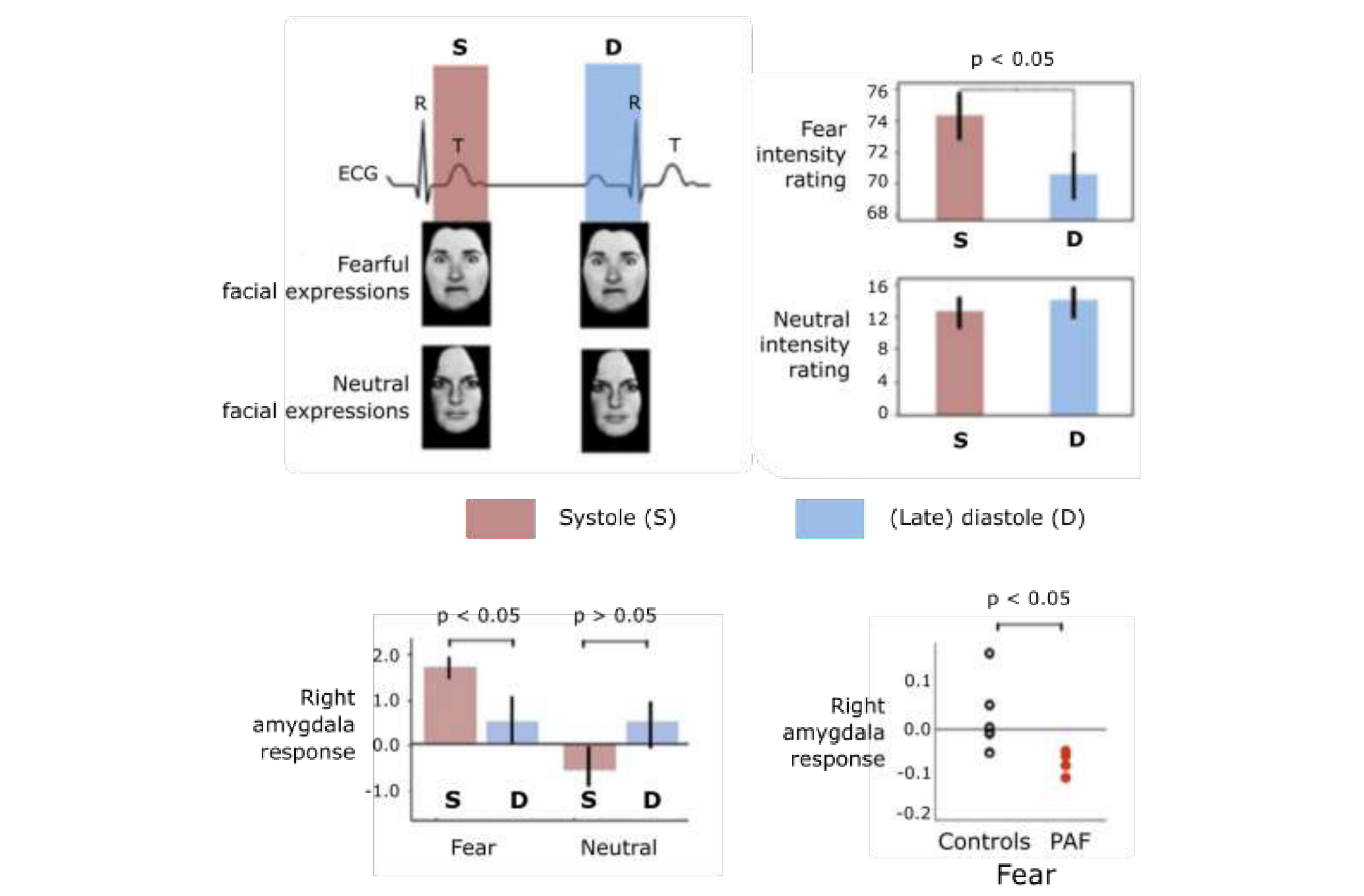 Figure 1.
Using the information and data, determine which of the statements are true or which are false.
Question reproduced from IBO 2018, Theoretical Paper 1, licensed under CC BY-NC-SA 4.0 - attributed to the International Biology Olympiad. Open the full exam PDF · Community solutions (unofficial)