Q21 - EBV Screening Test Sensitivity and Specificity
Nasopharyngeal carcinoma is closely associated with the Epstein-Barr virus (EBV) infection. In a recent prospective study involving more than 20,000 participants, detection of EBV DNA in plasma was shown to be useful in screening for nasopharyngeal carcinoma. However, 5.4% of participants without nasopharyngeal carcinoma had detectable EBV DNA in plasma at recruitment. Figure below shows the effect of ambient temperature on test results. Sensitivity refers to the test’s ability to correctly detect affected patients who do have the condition. It is calculated as: number of affected patients with positive tests/total number of affected individuals studied. Specificity relates to the test’s ability to correctly identified those without disease. It is calculated as: number of healthy individuals with negative tests/total number of healthy individuals studied.
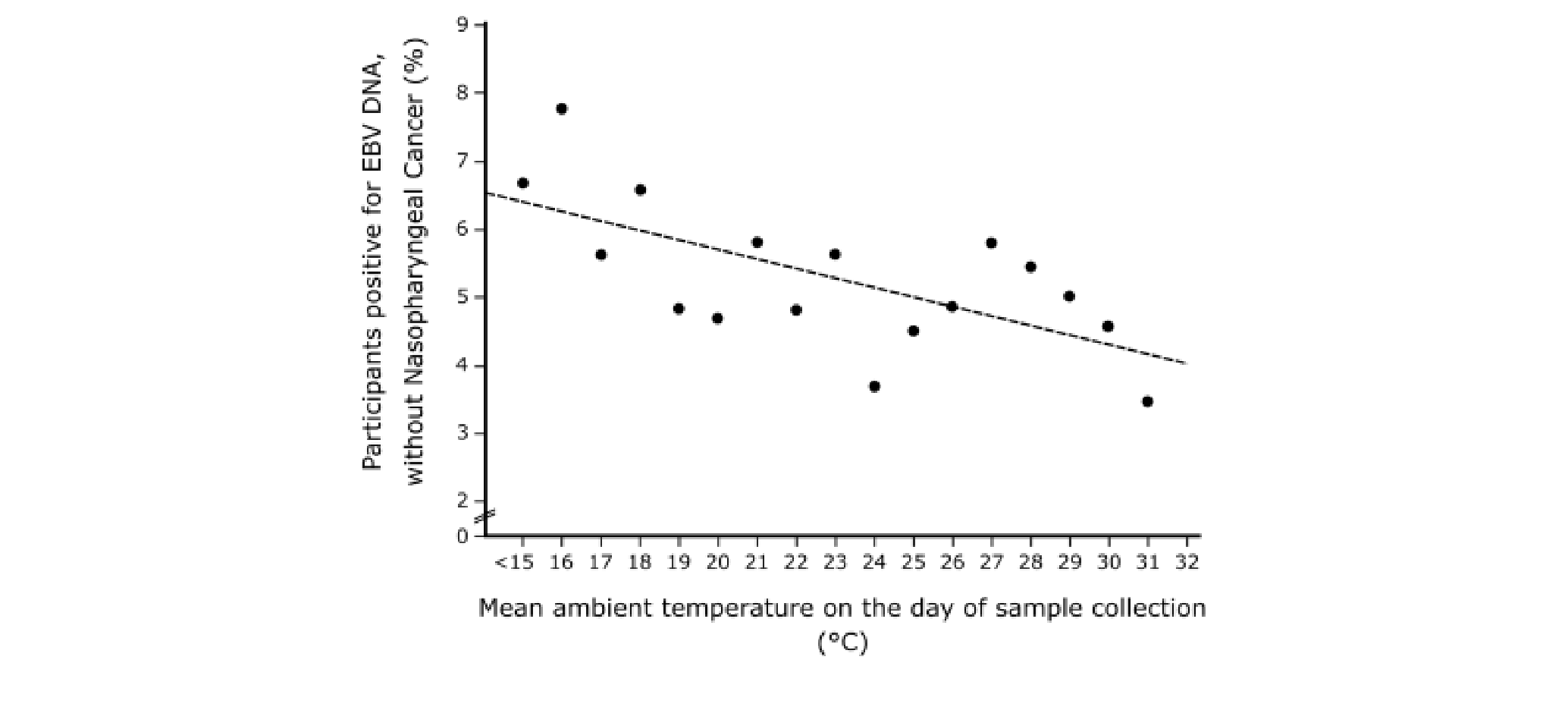 Figure 1.
Using the information and data, determine which of the statements are true or which are false.
Question reproduced from IBO 2018, Theoretical Paper 1, licensed under CC BY-NC-SA 4.0 - attributed to the International Biology Olympiad. Open the full exam PDF · Community solutions (unofficial)