Q20 - Osmolality and Sperm Motility Initiation
Spermatozoa motility is essential for the fertilization of an oocyte. In most animals, including fish, spermatozoa are immotile in the male reproductive organ (testis or sperm duct). Spermatozoa motility is triggered after being ejaculated into the female reproductive tract (in animals with internal fertilization) or after it is released into the aquatic environment (in animals with external fertilization). Ionic composition and osmolality of freshwater, seawater, and seminal plasma of pike (Esox lucius), sturgeon (Acipenser ruthenus), and cod (Gadus morhua) are shown in the table. Pike and sturgeon spawn in freshwater, and cod spawns in seawater.
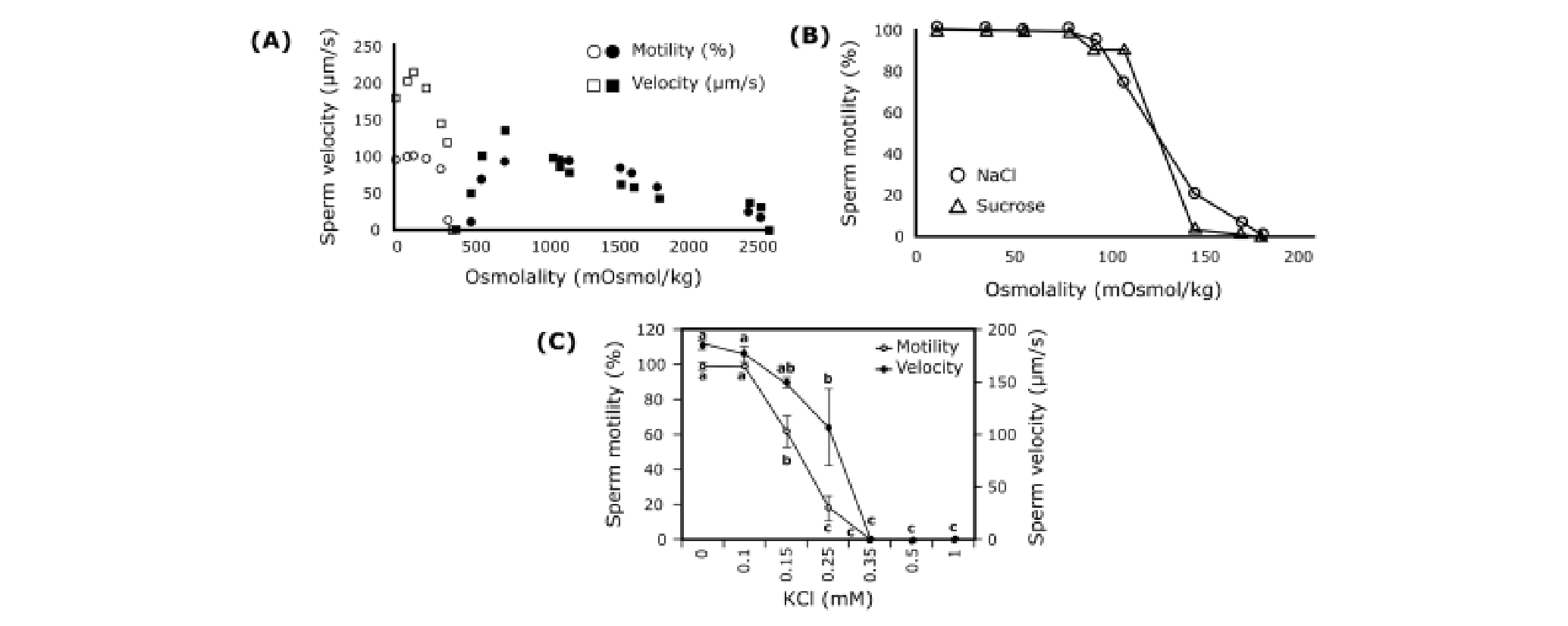 Figure 1.
Using the information and data, determine which of the statements are true or which are false.
Question reproduced from IBO 2018, Theoretical Paper 1, licensed under CC BY-NC-SA 4.0 - attributed to the International Biology Olympiad. Open the full exam PDF · Community solutions (unofficial)