Q35 - Kleptoplasty in Sacoglossan Sea Slugs
Chloroplast symbiosis or kleptoplasty refers to a naturally occurring process that results in maintenance of chloroplasts of one species in host cells of another species. This process has occurred in sacoglossan sea slugs (Figure 1: Pierce and Curtis, 2012). Cells that line the digestive diverticula of the slugs maintain chloroplasts that originated from algal food. Sea slug species with these chloroplasts are able to tolerate starvation for periods up to one year. It has been shown that some sea slugs are able to retain functional plastids for a year or more, or even to the end of their life. Several hypotheses were tested to find the mechanisms behind this kind of symbiosis. All earlier attempts to locate algal nuclei in such sea slugs failed. However, recent studies have demonstrated presence of Vaucheria litorea algal nuclear genes in genomic DNA of the larvae of the slug Elysia chlorotica which have never fed on V. litorea. Note that use of animal proteins by chloroplasts seems implausible.
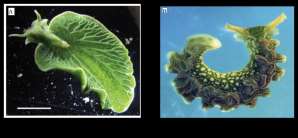 Figure 1.
Using the information and data, determine which of the statements are true or which are false.
Question reproduced from IBO 2018, Theoretical Paper 1, licensed under CC BY-NC-SA 4.0 - attributed to the International Biology Olympiad. Open the full exam PDF · Community solutions (unofficial)