Q41 - Runaway versus Chase-Away Sexual Selection
Evolution of sexual traits such as horn size, tail feathers and extreme coloration can be determined by sexual selection theory. According to the sexual selection theory male with such attributes gain an advantage over other males to acquire mate. Two processes have been proposed to account for exaggerated traits as the result of sexual selection (figure below). Runaway selection: Imagine some males with traits (such as tail length) with the higher survival rates than other males in same population. In this ancestral population, some females start to prefer these males. Their offspring will inherit both of these traits (higher tail length in males and females choice for such traits in males). This pattern generates a runaway process until the male trait becomes so exaggerated that it becomes selected against by natural selection. Chase-away selection: A mutation in males provides them with a novel trait that becomes sexually attractive to the females, and changes female mate choice in favour of such novel trait. Males with this mutation can easily mate with the females, while they don’t offer any material or genetic benefit to the females. When such choice becomes disadvantageous for the females, the females’ threshold increases against such a trait. Males with more extreme forms trait will again attract the females and this process will continue until natural selection selects against this exaggerated trait.
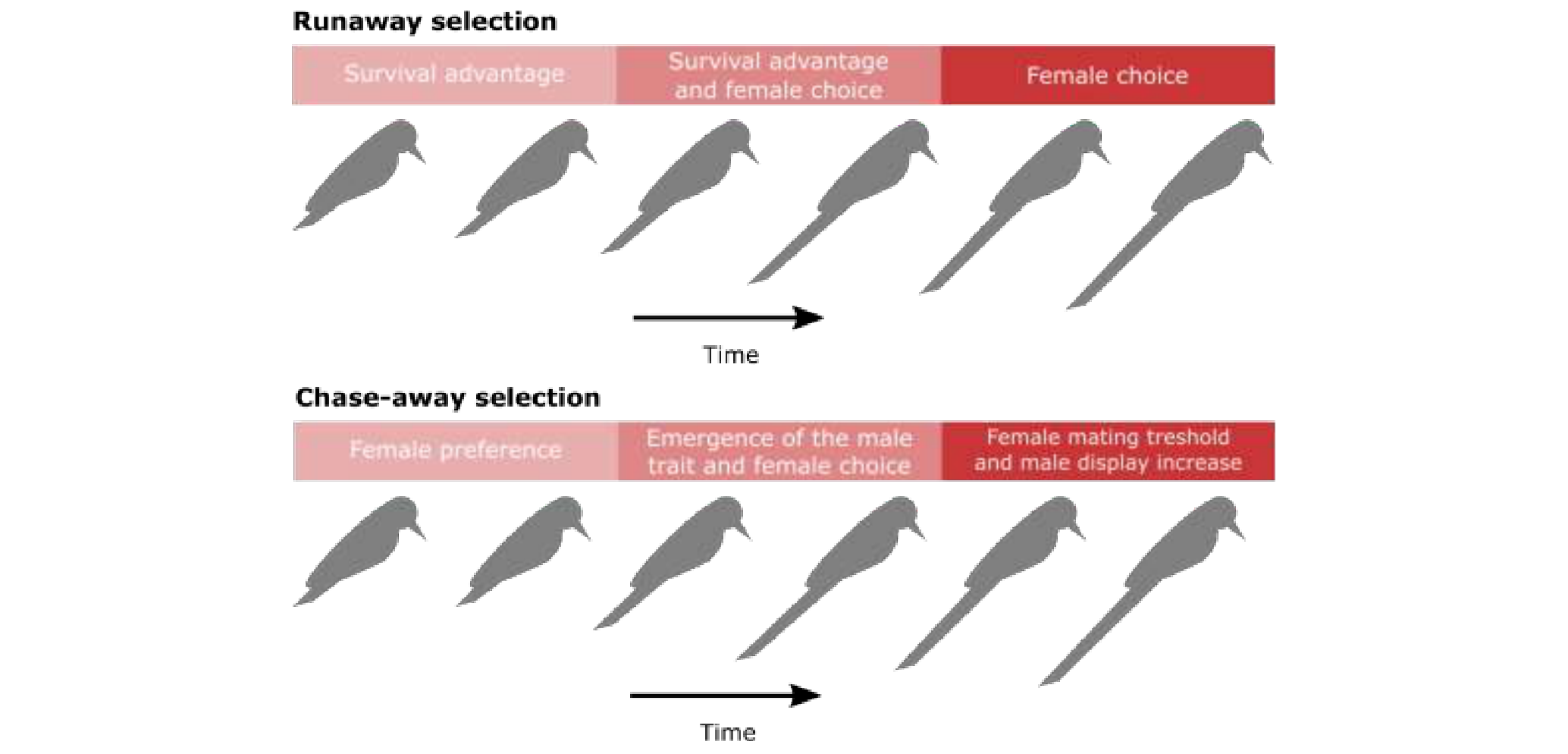 Figure 1.
Using the information and data, determine which of the statements are true or which are false.
Question reproduced from IBO 2018, Theoretical Paper 2, licensed under CC BY-NC-SA 4.0 - attributed to the International Biology Olympiad. Open the full exam PDF · Community solutions (unofficial)