Q10 - Cytosine Deamination and Why Uracil Is Excluded from DNA
There are four types of bases used for RNA - A, C, G and U - while for DNA there are four types of bases, A, C, G, and T. I wondered why thymine T could only be used for DNA and looked closely at the base-pairing pattern (Figure 1). It is reported that the mutant strain of the certain gene in Escherichia coli sometimes incorporates dUTP in place of thymine to include bases in the DNA strand. This frequently results in a new mutation. In a chemistry lecture, I learned that compounds such as bases could undergo chemical changes (mainly hydrolytic deamination) by reacting with certain water molecules even under in vivo conditions.
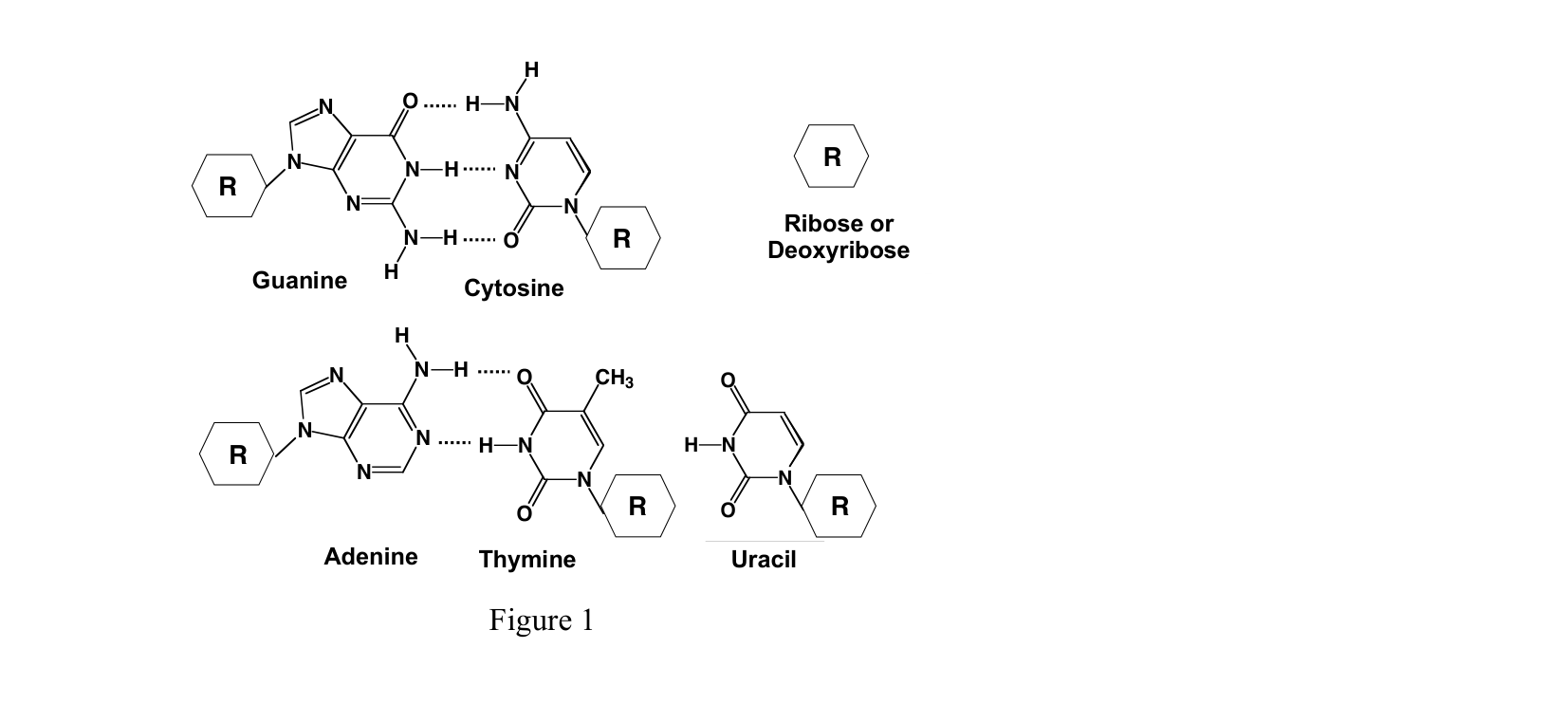 Figure 1.
Using the information and data, determine which of the statements are true or which are false.
Question reproduced from IBO 2020, Theoretical Exam 1, licensed under CC BY-NC-SA 4.0 - attributed to the International Biology Olympiad. Open the full exam PDF · Community solutions (unofficial)