Q15 - Gibberellin and Abscisic Acid Control of Seed Germination
The seed germination of plants is mainly controlled by the action of two plant hormones called gibberellin and abscisic acid. Gibberellin promotes germination and abscisic acid suppresses germination. Through the actions of these two plant hormones, plant seeds are regulated so that germination is induced in an appropriate environment. In plants, gibberellin is biosynthesized from a molecule called geranylgeranyl diphosphate. Geranylgeranyl diphosphate is converted into ent-kaurene through the action of ent-kaurene synthase. ent-Kaurene is then converted into gibberellin through the action of several enzymes such as GA20 oxidase. Biosynthetic intermediates such as ent-kaurene do not have germination-inducing activity (Figure 1). On the other hand, abscisic acid is biosynthesized from carotenoid pigments. Abscisic acid is converted into 8’- hydroxyabscisic acid by an oxidase called CYP707A. Seeds of Arabidopsis mutants lacking the gene encoding CYP707A were observed to have significantly delayed germination as compared to seeds of wild-type plants. In addition, the germination of the seeds of plants in which the CYP707A gene was overexpressed were promoted more than the wild-type seeds. In this experiment, the administered compounds play a similar function of endogenous hormones.
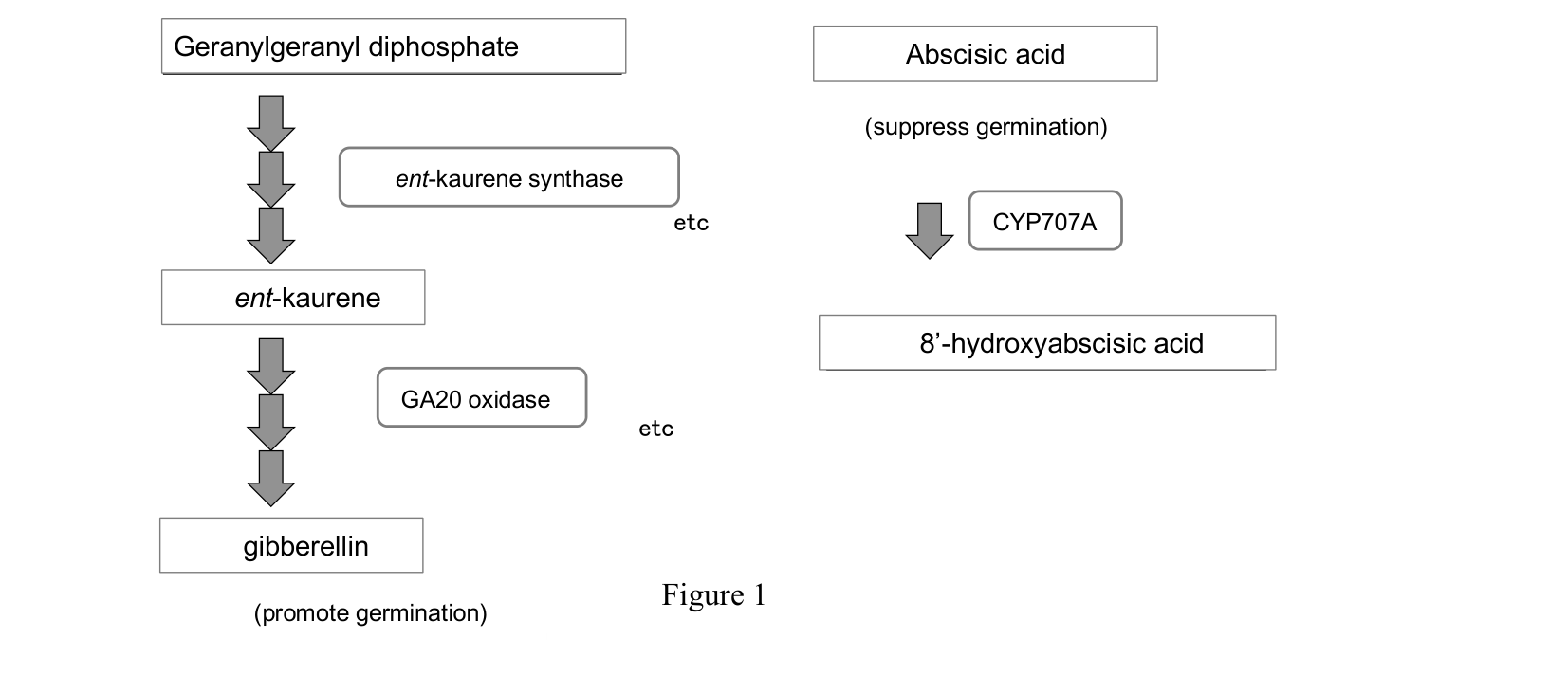 Figure 1.
Using the information and data, determine which of the statements are true or which are false.
Question reproduced from IBO 2020, Theoretical Exam 1, licensed under CC BY-NC-SA 4.0 - attributed to the International Biology Olympiad. Open the full exam PDF · Community solutions (unofficial)