Q19 - Tissue Distribution of the Glucagon Receptor and Metabolic Roles
Glucagon is secreted from pancreatic A-cells and works as a signal via receptors (GLR) on the cells of target tissues. The amount of GLR expressed on cell surfaces is important in determining the magnitude of the response to glucagon in each target tissue. Figure 1 shows the amount of GLR mRNA in different rat tissues. In the data shown here, the glucagon receptor is not detected in brain tissue, but recent reports have revealed that it is present even in a very small amount, e.g., in the hypothalamus.
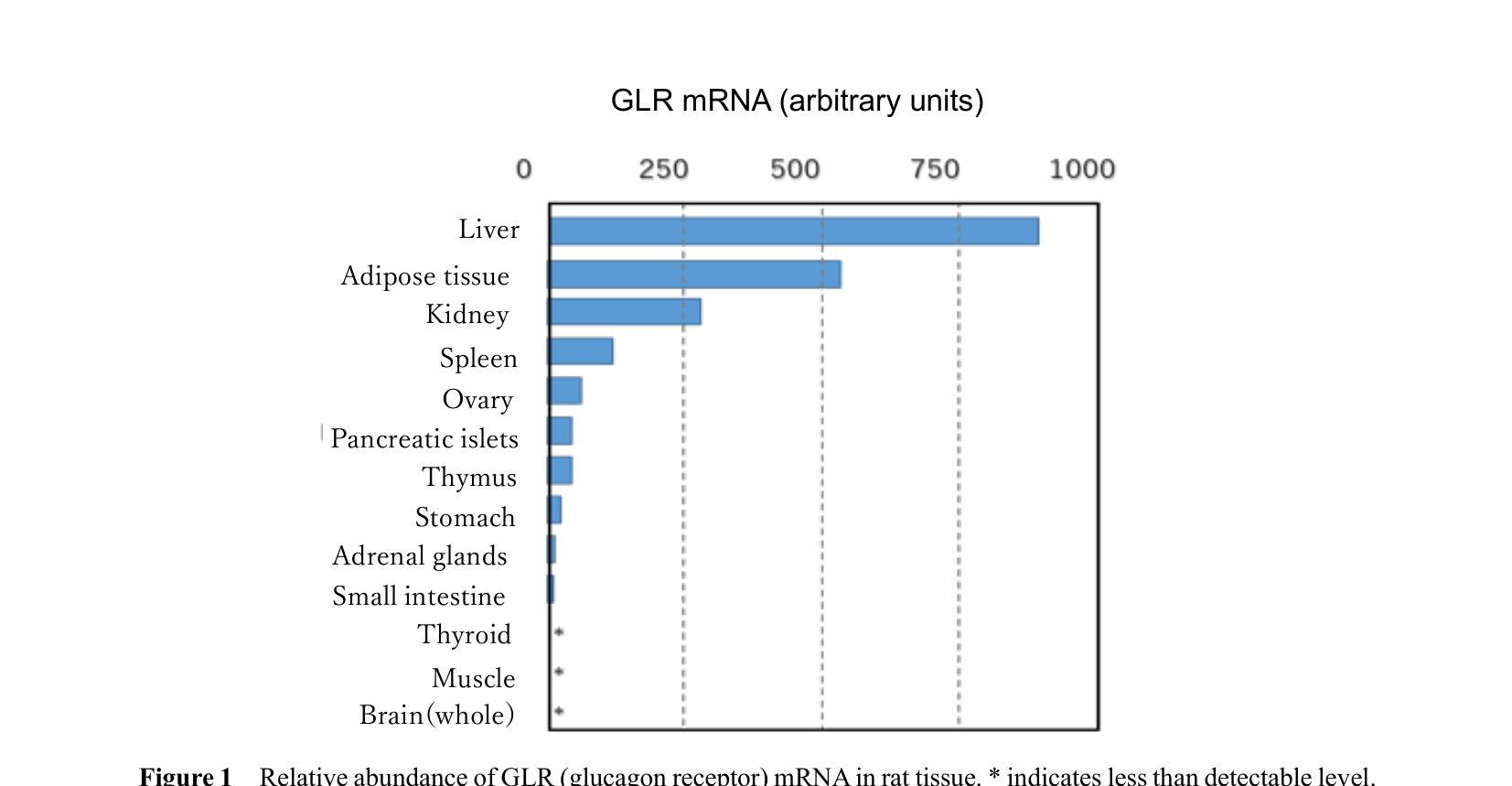 Figure 1.
Using the information and data, determine which of the statements are true or which are false.
Question reproduced from IBO 2020, Theoretical Exam 1, licensed under CC BY-NC-SA 4.0 - attributed to the International Biology Olympiad. Open the full exam PDF · Community solutions (unofficial)