Q42 - Reading a Cetacean Phylogeny for Lifestyle and Trait Evolution
Figure 1 shows the evolution of cetaceans. Studies using stable isotopes indicate that Pakicetus and Amburocetus ate freshwater fish, while Remingtonocetus, Miacetus and Basirosaurus ate seawater fish. Indhyus was, like most extant artiodactyls, a terrestrial herbivorous animal. Judging ONLY from this phylogenetic tree, indicate whether each of the following statements is true or false.
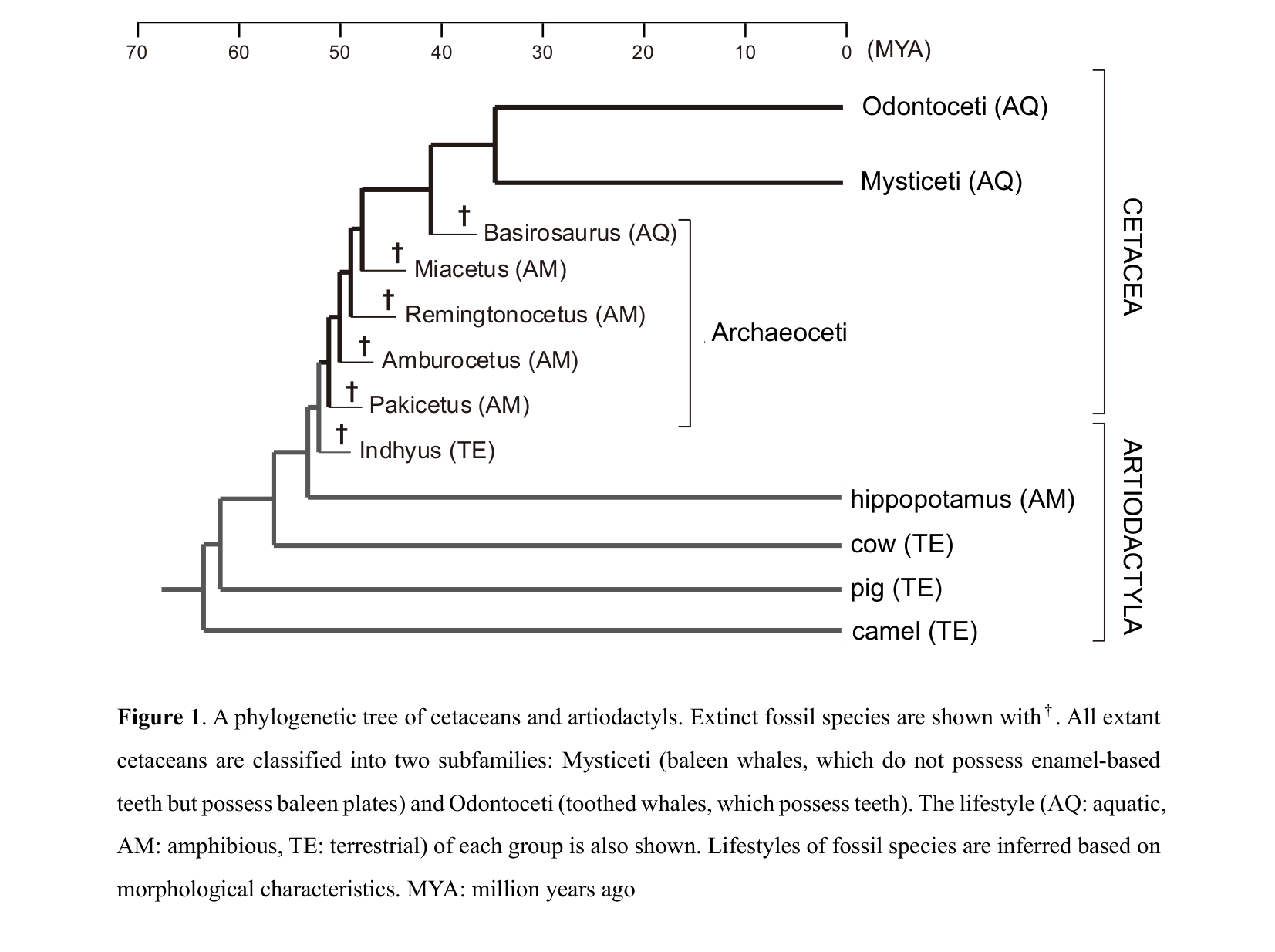 A phylogenetic tree of cetaceans and artiodactyls. Extinct fossil species are shown with†. All extant cetaceans are classified into two subfamilies: Mysticeti (baleen whales, which do not possess enamel-based teeth but possess baleen plates) and Odontoceti (toothed whales, which possess teeth).
Using the information and data, determine which of the statements are true or which are false.
Question reproduced from IBO 2020, Theoretical Exam 1, licensed under CC BY-NC-SA 4.0 - attributed to the International Biology Olympiad. Open the full exam PDF · Community solutions (unofficial)