Q43 - Hox Gene Collinearity and Ubx Function Across Insect Lineages
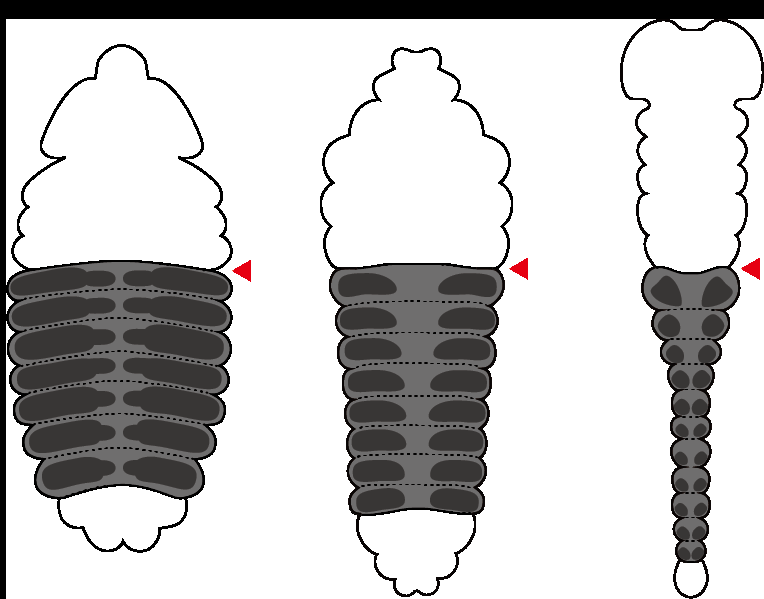
Proteins encoded by Hox genes share a 60-amino-acid DNA-binding motif, the homeodomain. In the fruit fly Drosophila melanogaster genome, eight Hox genes are assembled in one cluster on the same chromosome (Figure 1A). The segmental expression pattern of Hox genes along the anterior-posterior axis of the fruit fly embryo shows collinearity with the gene order on the chromosome (Figure 1B). Fruit flies normally possess a pair of wings that develop from the second thoracic segment (T2) of the embryo, and a pair of balance organs (halteres) that develop from the third thoracic segment (T3). When the gene expression of Ubx gene is lost by mutations, T3 transform into T2 and two pairs of wings are formed. Beetles and grasshoppers have two pairs of wings although the most anterior segment of the UBX protein expression of their embryos is found in T3, the same as that of the wild fruit fly (Figure 1C).
 (A) Eight Hox genes on the fruit fly genome: lab, pb, Dfd, Scr, Antp, Ubx, abd-A, and Abd-B. (B) Segmental expression pattern of the Hox genes in the fruit fly embryo. Anterior is the left. The expression patterns for each gene are illustrated by labels that correspond to (A).
Using the information and data, determine which of the statements are true or which are false.
Question reproduced from IBO 2020, Theoretical Exam 1, licensed under CC BY-NC-SA 4.0 - attributed to the International Biology Olympiad. Open the full exam PDF · Community solutions (unofficial)