Q15 - Engineering Candida tropicalis Gene Disruptions to Boost Xylitol Production
Streptococcus mutans, which causes tooth decay, cannot utilize xylitol (C5H12O5). Therefore, xylitol is used as a sweetener to prevent tooth decay. Xylitol is produced by microbial conversion from xylose contained in hemicellulose. The diploid yeast strain Candida tropicalis AT36 can grow with xylose as the sole carbon source (Figure 1). In this strain, the enzyme activities of XR, XDH, and XK are almost proportional to the copy number of each gene. The AT36 strain was cultured by adding 40 g of xylose and 5 g of glucose as a carbon source in the culture solution (1 L). As the result, about 25 g of xylitol was produced, as shown in graph (A) in Figure 2. Therefore, the following gene-disrupted strains were constructed and cultured in the same manner in order to increase xylitol production: (Disruptant A) one XYL1 gene disrupted. (Disruptant B) both XYL1 genes disrupted. (Disruptant C) one XYL2 gene disrupted. (Disruptant D) both XYL2 genes disrupted.
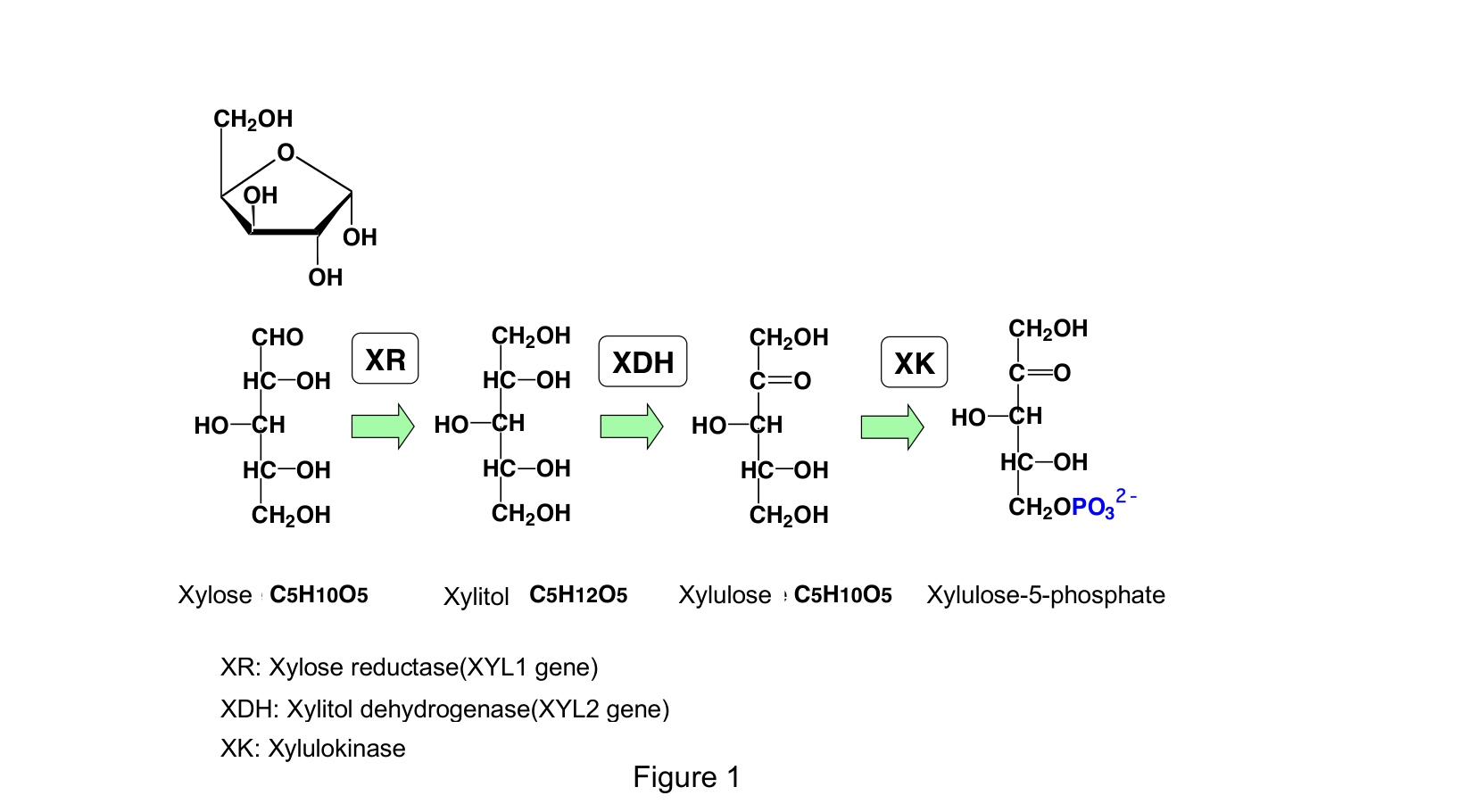 Figure 1.
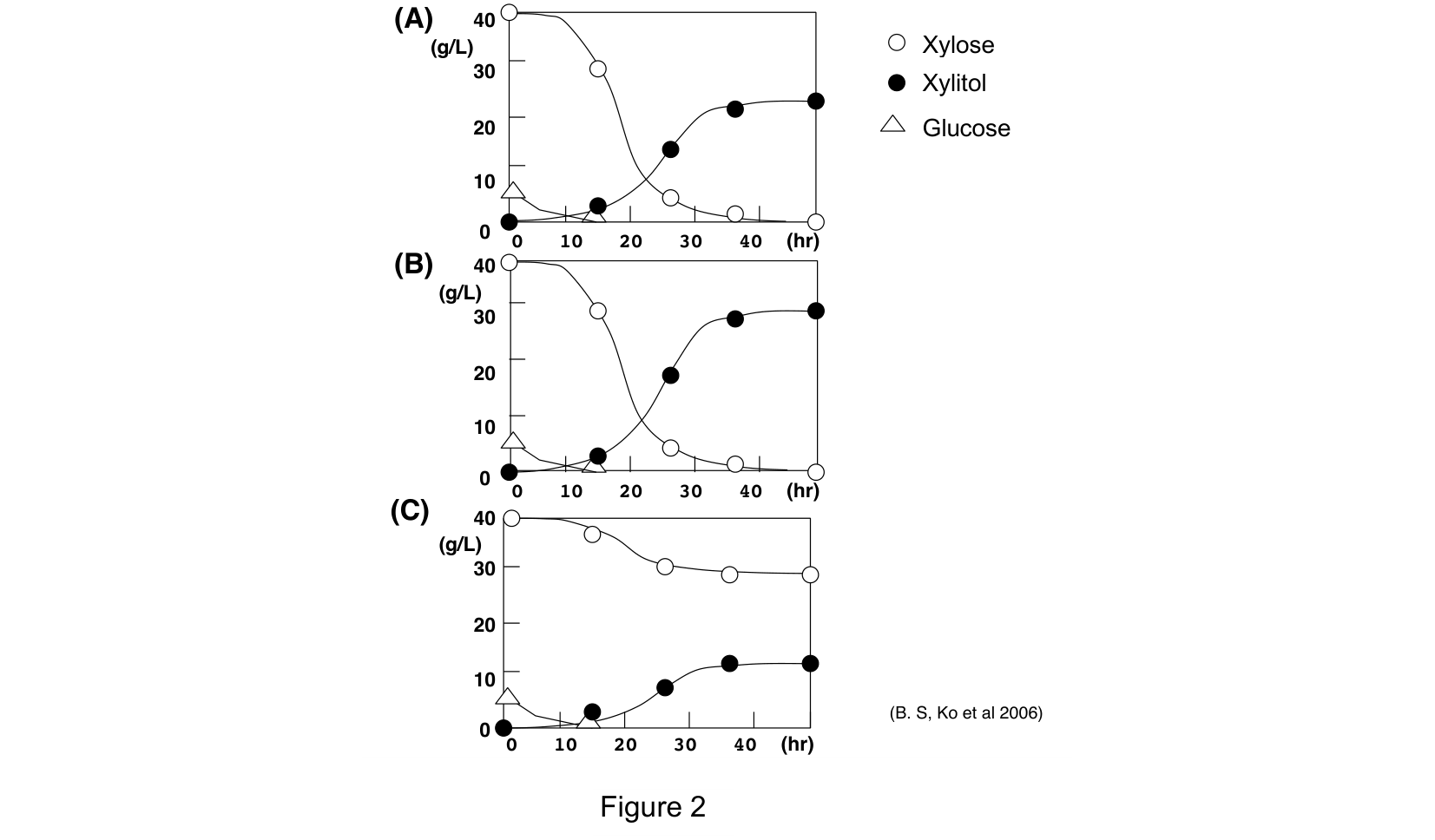 Figure 2.
Using the information and data, determine which of the statements are true or which are false.
Question reproduced from IBO 2020, Theoretical Exam 2, licensed under CC BY-NC-SA 4.0 - attributed to the International Biology Olympiad. Open the full exam PDF · Community solutions (unofficial)