Three stages of transmission are considered before a zoonotic disease leads to a pandemic in human society
(Figure 1): A, spillover from the natural reservoir (bats and other wildlife) to an intermediate host or directly
to humans; B/B’, transmission between natural reservoir, intermediate hosts, and humans; C, spread within
human society leading to a pandemic. Coronaviruses are a group of viruses that can cause such pandemics, and
their natural host is generally believed to be bats.
Figure 1.
Using the information and data, determine which of the statements are true or which are false.
Q29-1. Which factor increases variation of the coronavirus genome in A? Choose a combination of correct answers: a) The viral genome is surrounded by capsids. b) The virus has an envelope. c) The host DNA replication mechanism has a proofreading function. d) The genome size is large for a RNA virus. e) The genome is segmented by some polycistronic genes.
Q29-2. Which of the following facts contribute to the transmission of coronavirus in B and B'? Choose a combination of correct answers: a) Disease does not develop in natural host bats. b) Multiple types of coronaviruses are detected in the fecal masses of bats in one cave by RT-PCR. c) Many bat species are nocturnal. d) Habitat changes occur due to climate change. e) Many bat species feed on various insects.
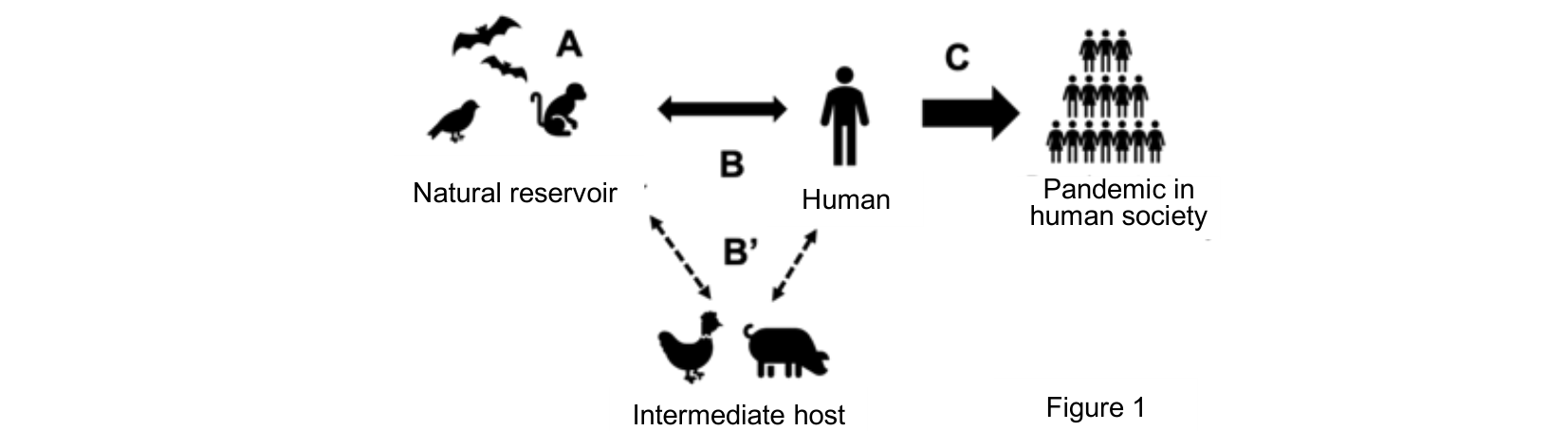 Figure 1.