Q22 - Social Stress Response in Mice - Dominance Hierarchy
At the basis of the hierarchy/subordination of individuals in a population is a complex system of behavioral and physiological reactions. In mammals, the stress response is an important part of this. Experiments on mice have shown that regular changes in behavior are accompanied by regular changes in stress response. Prior to grouping, male mice were kept alone and did not meet one another. The degree of stress expression was determined by measuring suppression of breathing.
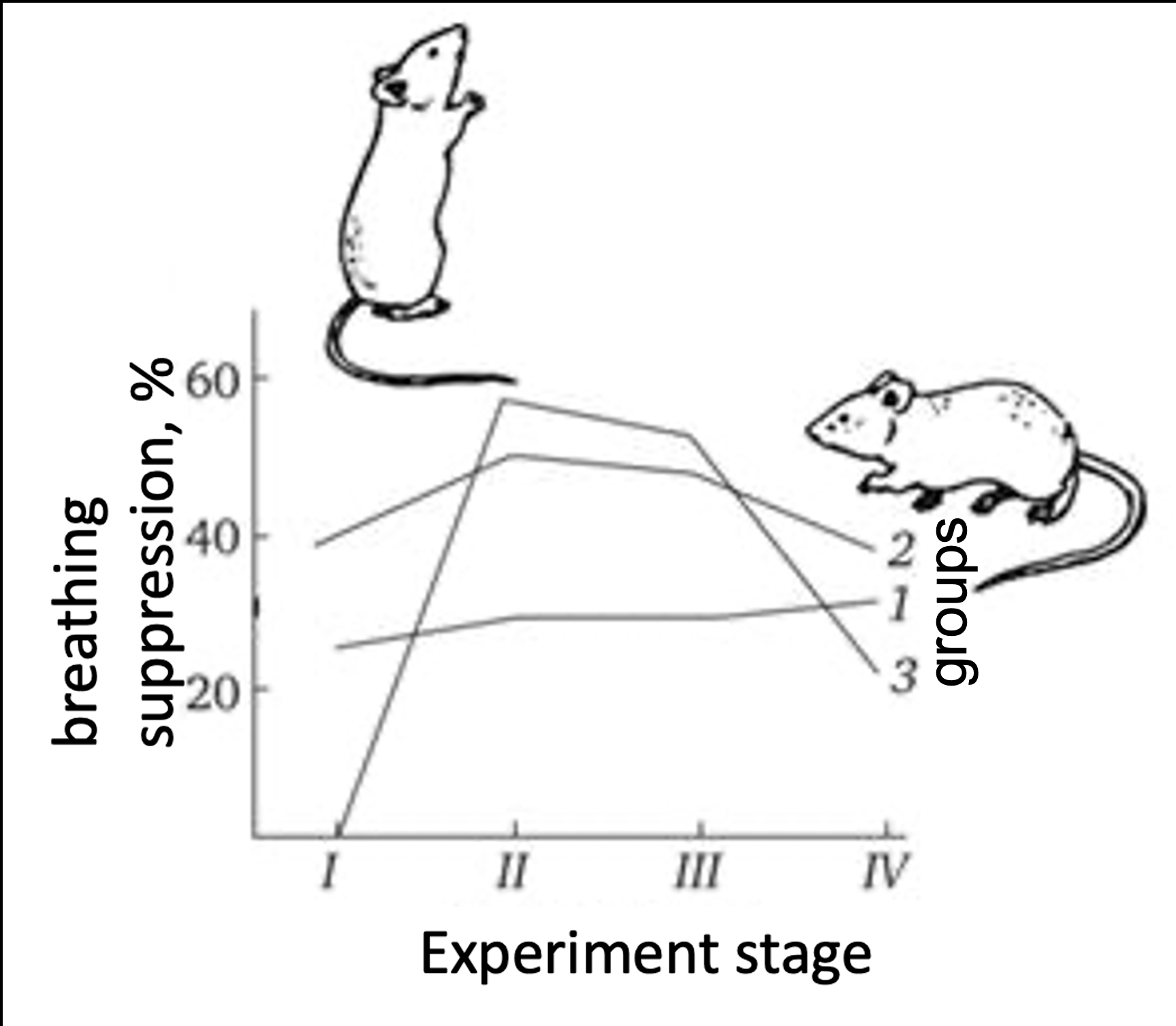 Dynamics of stress response in males of different social statuses during a group-formation experiment (average group data). 1 - dominants, 2 - subdominants, 3 - subordinates. I - before group formation (kept alone), II - 1st day in the group, III - 7th day in the group, IV - 2nd day after separation from the group.
Using the information and graph, determine whether the following statements are true or false:
Question reproduced from IBO 2022, Theoretical Paper 1, licensed under CC BY-NC-SA 4.0 - attributed to the International Biology Olympiad. Open the full exam PDF · Community solutions (unofficial)