Q45 - Drosophila Color Preference and Circadian Activity
Drosophila melanogaster fruit flies have complex innate color preferences depending on time of day. Flies were kept for 6 days in tubes with plastic colored filters creating red, blue, and green bands, at constant temperature/humidity with a 12h light/12h dark cycle. Color preference was measured by the number of flies in each color zone, alongside their motor activity.
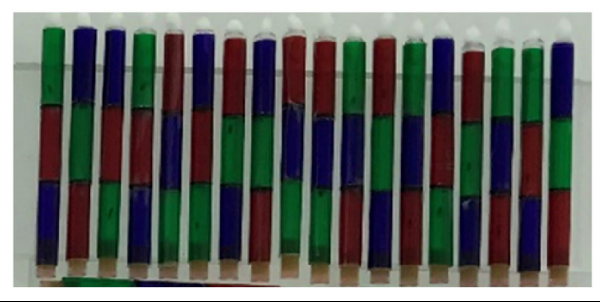 Figure 1. An example of the randomized order of filters.
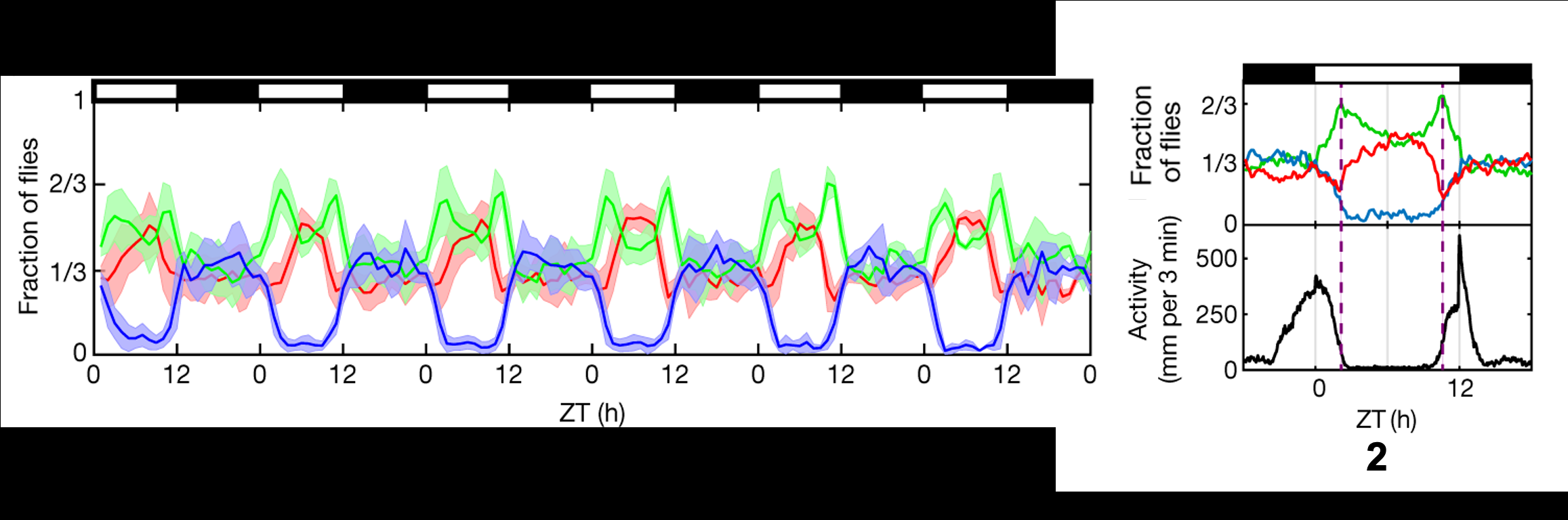 Figure 2. Fruit fly color preferences and motor activity during 6 days. ZT 0 - the start of daylight, ZT 12 - the point of lights being turned off. Panel 1: color preferences of flies. Panel 2: top curve - proportion of flies in different color bands; bottom curve - mobile activity of flies.
Using the information and figures, determine whether the following statements are true or false:
Question reproduced from IBO 2022, Theoretical Paper 1, licensed under CC BY-NC-SA 4.0 - attributed to the International Biology Olympiad. Open the full exam PDF · Community solutions (unofficial)