Q74 - Pathophysiology of Traumatic Brain Injury
The biochemical and physiological processes accompanying cerebral injuries frequently turn into sources of secondary tissue damage themselves. These processes can be caused by many factors, e.g., dysfunction of mitochondria, anaerobic stress, peroxide-mediated oxidation of lipids, axon degeneration and cell death. Due to demyelination and disruption of the axonal cytoskeleton, the accumulation of transport proteins at the axon terminus takes place, which leads to accumulation of neurotransmitters in the synaptic cleft. Then, NMDA and AMPA receptors in postsynaptic membranes are activated, thus enhancing Ca2+ influx from intracellular stores.
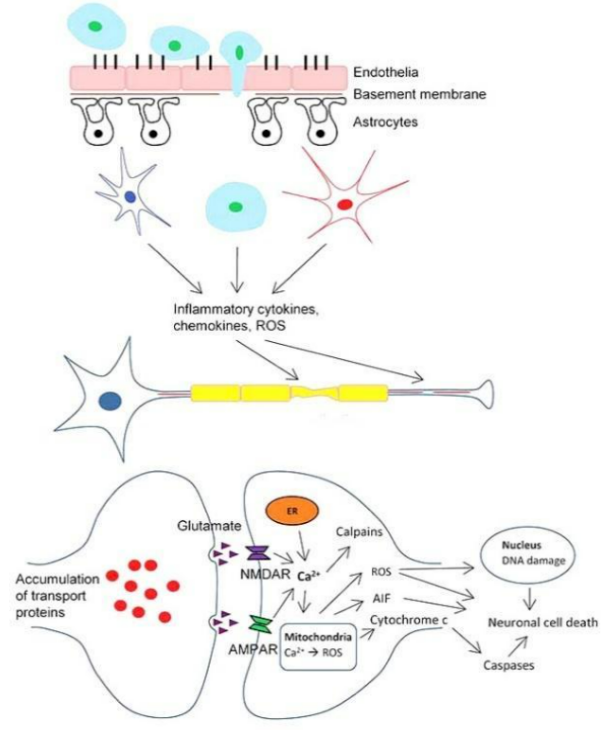 Figure. Schematic representation of the pathophysiology of traumatic brain injury (TBI). ROS = reactive oxygen species; AMPAR = α-amino-3-hydroxy-5-methyl-4-isoxazole propionic acid receptor; NMDAR = N-methyl-D-aspartate receptor; ER = endoplasmic reticulum; AIF = apoptosis-inducing factor protein.
Using this information, determine whether the following statements are true or false.
Question reproduced from IBO 2022, Theoretical Paper 2, licensed under CC BY-NC-SA 4.0 - attributed to the International Biology Olympiad. Open the full exam PDF · Community solutions (unofficial)