Q94 - Canine Pedigree Analysis of a Monogenic Disease
Below is a canine pedigree of a common monogenetically inherited disease. Squares and circles represent males and females respectively, and black and white colors indicate the presence or absence of the trait respectively. The numbers indicate the number of dogs in each category and the diagonal lines crossing over squares/circles indicate a deceased dog.
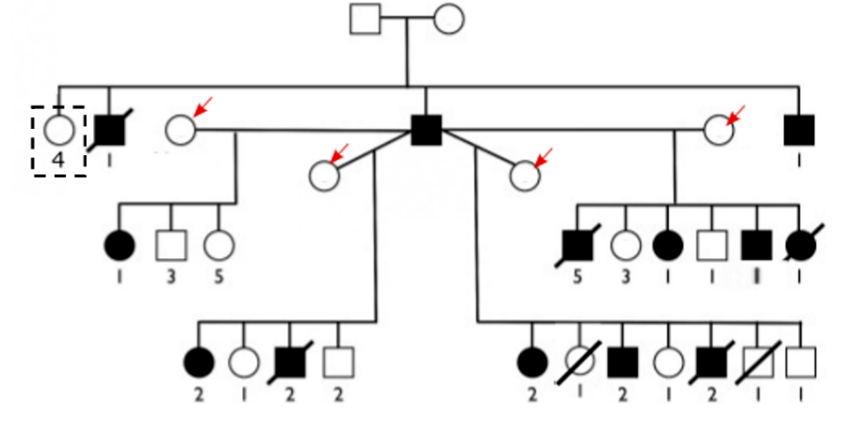 Canine pedigree of a monogenically inherited trait, spanning four generations. Filled shapes = affected; open shapes = unaffected; diagonal line = deceased; numbers = count of individuals in that category.
Using the information and pedigree, determine whether the following statements are true or false.
Question reproduced from IBO 2022, Theoretical Paper 2, licensed under CC BY-NC-SA 4.0 - attributed to the International Biology Olympiad. Open the full exam PDF · Community solutions (unofficial)