Q27 - Dog Body Size and the IGF1 Locus
Domestic dogs (Canis lupus familiaris) are a subspecies of grey wolves (Canis lupus). Dogs are unique amongst mammal species for their extremely large range of body sizes.
Scientists sequenced a region of DNA around the IGF1 (insulin-like growth factor 1) gene in thousands of dogs. They found a common SNP (single nucleotide polymorphism); a C vs T mutation.
The genotype of the IGF1 SNP was plotted against dog body mass, and against levels of IGF1 in serum (blood).
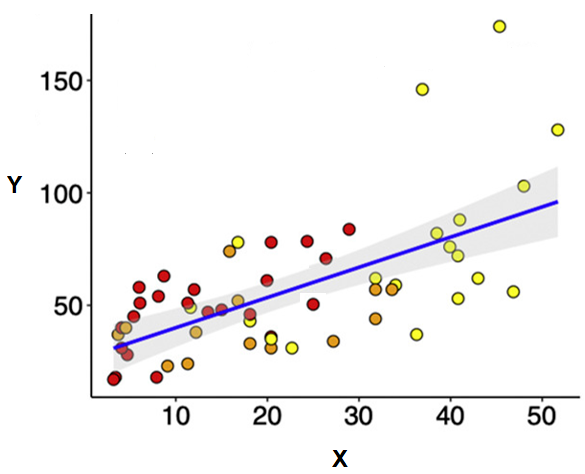 X = Body mass (kg), Y = IGF-1 Serum level (nmol/L). Red = CC genotype, Orange = CT genotype, Yellow = TT genotype.
Next, scientists sequenced the same SNP in individuals from species across the wider canid (dog) family.
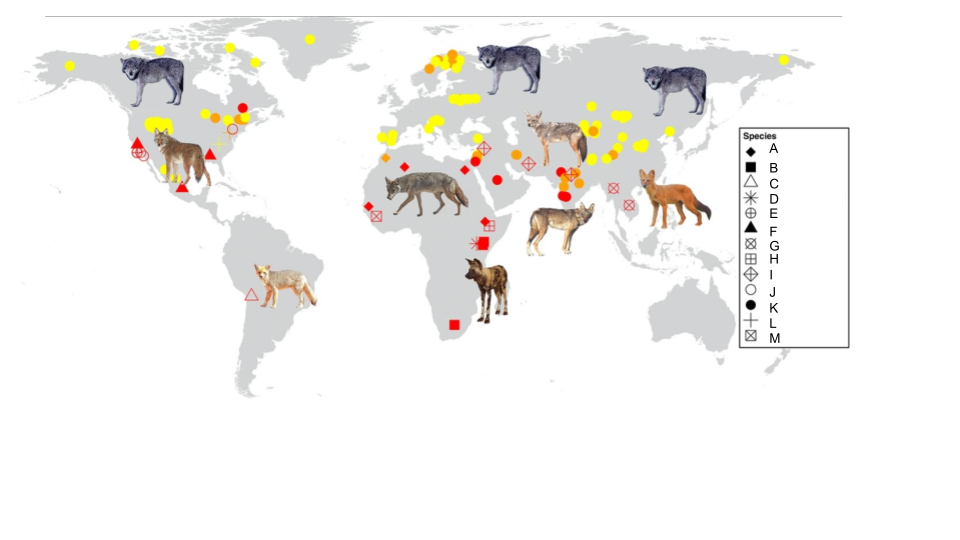 Distribution of IGF1 SNP genotypes across the canid family. A = Golden Wolf, B = Hunting Dog, C = Andean Fox, D = Black Jackal, E = Island Fox, F = Coyote, G = Dhole, H = Ethiopian Wolf, I = Golden Jackal, J = Grey Fox, K = Grey Wolf, L = Red Wolf, M = Striped Jackal. Yellow = TT, Orange = CT, Red = CC.
Question reproduced from IBO 2023, Theoretical Paper 1, licensed under CC BY-NC-SA 4.0 - attributed to the International Biology Olympiad. Open the full exam PDF